Moving water completely changes the energy of a backyard. The ambient sound lowers stress, masks traffic noise, and gives a patio the kind of dynamic focal point that static hardscape alone cannot provide. In the Raleigh area, the climate supports outdoor entertaining for most of the year, making a water feature a highly functional daily asset.
This guide highlights six distinct water feature styles with actual 2026 costs and guidance on selecting the right fit for your space.
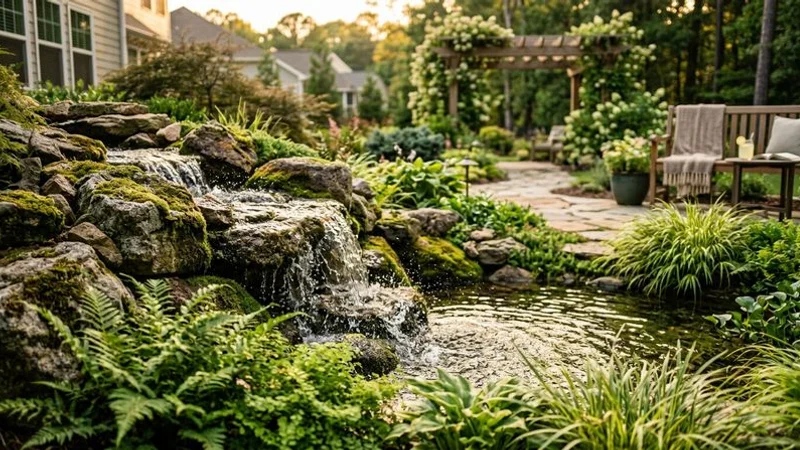
1. Natural Stream and Waterfall
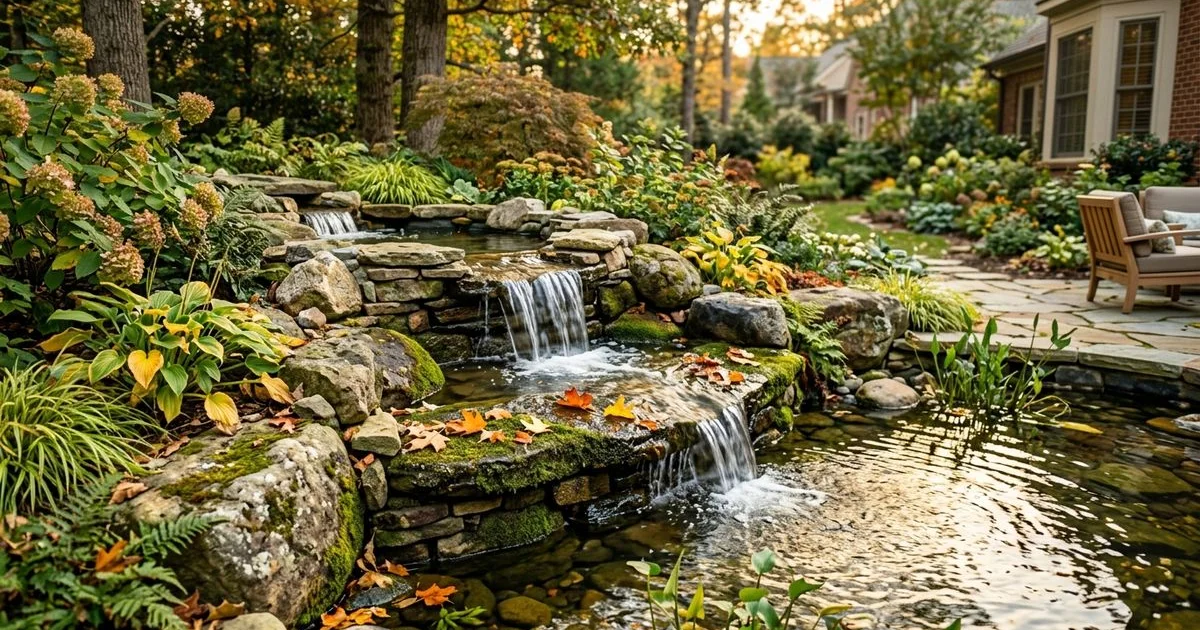
Meandering streams are the most immersive way to bring nature directly to your back door. A carefully graded watercourse tumbling over local North Carolina fieldstone creates the illusion that a natural creek has always existed on the property. The best designs start at a high point in the yard, routing water past patios and through garden beds before it collects in a hidden reservoir.
Properties across the Triangle often feature natural grade changes that make them excellent candidates for this style. Red clay subsoil provides an incredibly stable base for heavy boulder placement when properly engineered. Incorporating multiple small drops rather than one massive cascade distributes sound evenly and blocks out neighborhood noise effectively.
In 2026, natural stream costs vary based on scale:
- Entry-Level Streams: A modest 10-foot feature starts around $7,400.
- Mid-Range Designs: A 15-foot stream with multiple cascades averages $15,000 to $23,000.
- Luxury Ecosystems: Elaborate multi-tier designs can exceed $35,000.
Using a mix of boulder sizes creates an authentic look. Place the largest one-ton stones at the bottom and progressively smaller rocks near the top to mimic natural geological formations found in the Piedmont region.
2. Koi Pond with Waterfall
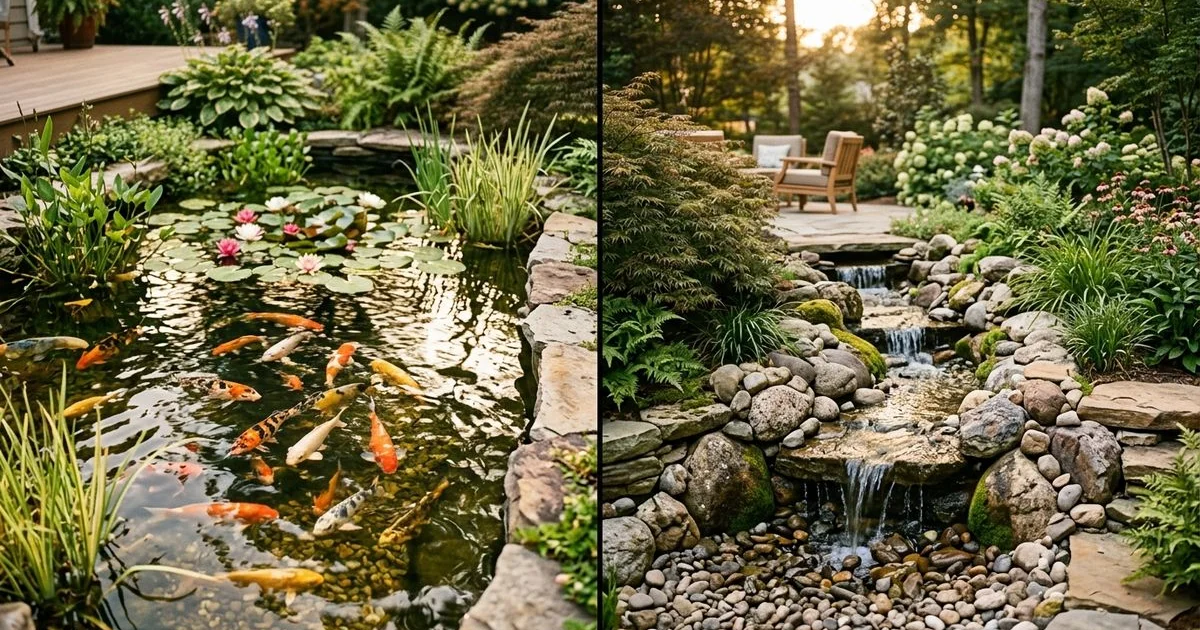
Adding living creatures takes a backyard water feature to an entirely different level. A koi pond introduces vibrant color, interactive feeding routines, and a self-sustaining ecosystem that evolves through the seasons. The key is designing a system that balances clear water, healthy aquatic plants, and thriving fish.
In the Triangle area, which sits in USDA Hardiness Zone 7b and 8a, pond depth is critical for winter survival. Digging koi ponds to 3 to 4 feet deep provides a thermal refuge that prevents water from freezing solid during deep winter cold snaps. That extra depth also gives fish a safe place to hide from local predators like great blue herons and raccoons.
Maintaining a Healthy Ecosystem
Powerful biological and mechanical filtration keeps water crystal clear. Aquatic plants like water lilies and lotus act as natural nutrient filters to prevent algae blooms. Seasonal protocols for fish care based on water temperature are essential.
| Season | Water Temperature | Required Action for Fish Health |
|---|---|---|
| Spring | Rising above 50°F | Begin light feedings with easily digestible food. |
| Summer | 65°F to 85°F | Maximize aeration, feed regularly, and monitor shade. |
| Fall | Dropping below 50°F | Stop all feeding to prevent digestive issues. |
| Winter | Below 40°F | Keep a hole in the surface ice to allow gases to escape. |
Expect to invest between $15,000 and $35,000 for a professionally installed, 1,000-gallon ecosystem koi pond in 2026. The initial cost covers heavy excavation, commercial-grade skimmers, and premium biological filters needed to process fish waste.
3. Pondless Waterfall
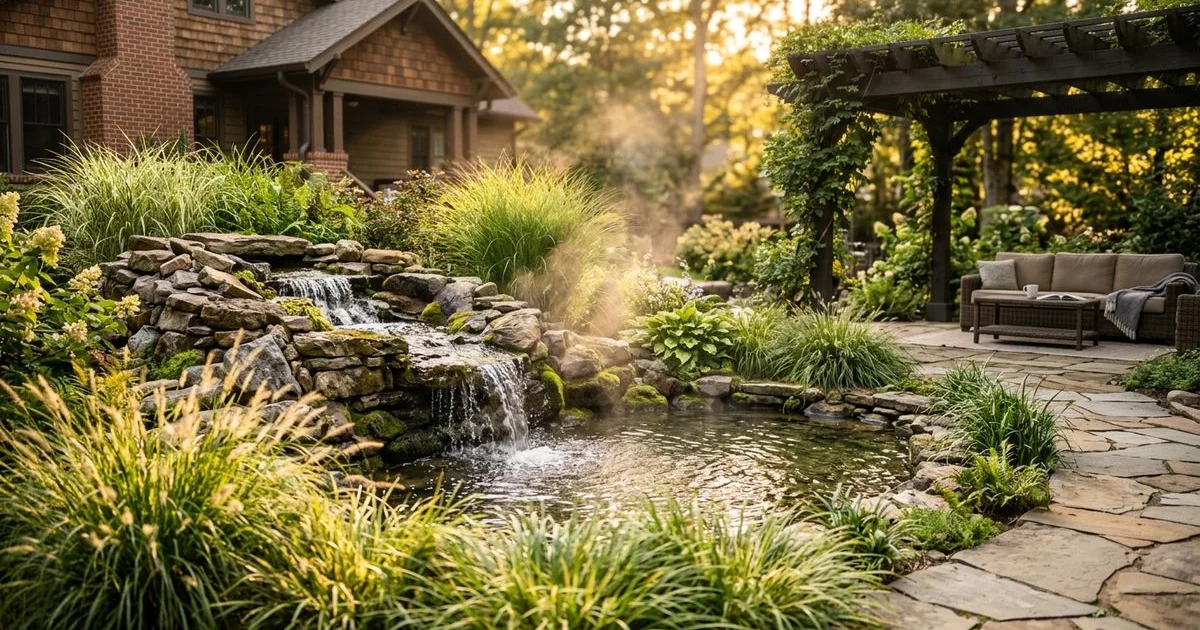
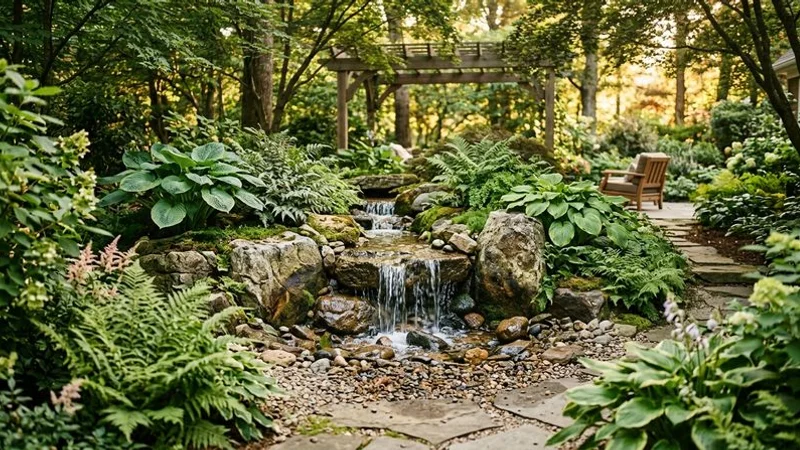
Pondless waterfalls deliver the dramatic visual and auditory impact of a cascading stream without the maintenance requirements of standing water. Water cascades over natural boulders into a concealed underground basin, and a heavy-duty pump recirculates it back to the top of the falls.
You get the soothing white noise of a waterfall without worrying about fish care or complex filtration. This makes it the ideal choice for busy homeowners who want maximum sensory reward with minimal upkeep.
Strategic Plantings for a Natural Look
The moisture generated by the waterfall supports lush, shade-loving plants that might otherwise struggle in the dry heat of a typical Carolina summer. Cardinal Flowers (Lobelia cardinalis) thrive in wet soil near the base and act as a magnet for hummingbirds. Liriope and Autumn Ferns soften the transition between hard stone and the surrounding lawn.
Current 2026 installation costs for pondless waterfalls range from $8,000 for a compact 6-foot cascade to over $30,000 for expansive, multi-directional features. The hidden reservoir requires very little space, allowing these waterfalls to fit into tight courtyards or alongside existing retaining walls.
4. Stone Bubbler
Stone bubblers bring tranquility to tight spaces. A bubbler consists of a single, naturally beautiful stone drilled through the center. A small water basin hides beneath the ground, and a pump pushes water up through the stone so it gently ripples over the sides. The result is a quiet, intimate murmuring sound rather than the loud splash of a waterfall.
Bubblers provide excellent versatility across different areas:
- Townhome Patios: Offers a soothing focal point without dominating limited square footage.
- Front Entryways: Welcomes guests with a subtle, inviting trickling sound.
- Garden Retreats: Acts as a beautiful natural accent beside a quiet seating area.
Basalt columns and locally sourced granite boulders work well for this application. Basalt offers a sleek, dark contrast to green foliage, while granite blends seamlessly with traditional architecture.
A professional stone bubbler installation typically starts around $3,500. Maintenance involves occasionally cleaning the pump filter and topping off the hidden reservoir to replace water lost to evaporation.
5. Formal Fountain
Formal fountains add architectural elegance to traditional and transitional properties. While natural stone waterfalls mimic the wilderness, a structured fountain introduces symmetry and curated refinement. These designs work beautifully in established Raleigh neighborhoods with traditional architecture.
Options include tiered pedestal fountains, wall-mounted sconces, and raised geometric reflection pools. Cast stone and reinforced concrete are the most practical materials for the Southern climate. Cast stone weathers gracefully over time, developing a natural patina that makes the piece look like an original fixture of the home.
Managing Sound Profiles
The acoustic profile of a formal fountain depends entirely on its shape and water pressure.
- Single Jet: Produces a crisp, energetic splash that demands attention.
- Tiered Bowls: Create a gentle, cascading rhythm perfect for quiet conversations.
- Wall Scuppers: Deliver a continuous sheet of water that expertly masks nearby traffic.
Installation costs in 2026 generally span from $3,500 for high-quality prefabricated units to over $20,000 for custom-carved centerpieces.
6. Rain Curtain Wall
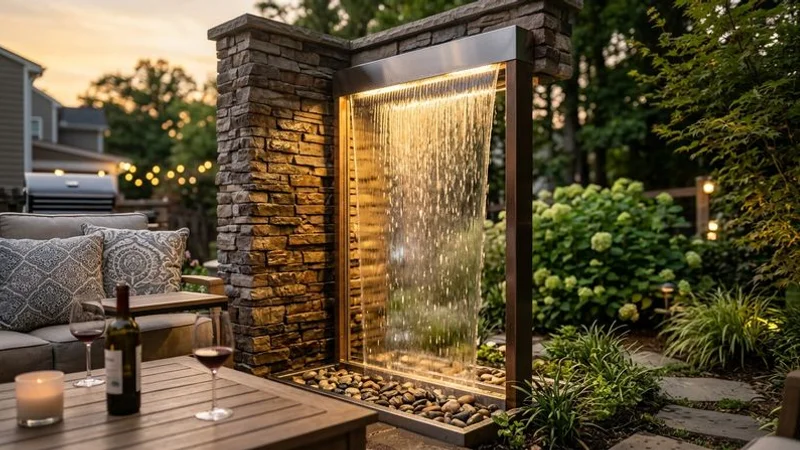
Rain curtains make a striking contemporary statement. A horizontal upper channel drops a thin, perfectly spaced sheet of water into a lower basin. These transparent water walls create kinetic dividers between different outdoor living zones, providing auditory separation between a dining patio and a lounge area without blocking your line of sight.
Technical Requirements
Building a flawless rain curtain requires precise engineering and premium materials. 316L marine-grade stainless steel is essential for the upper channels to prevent corrosion. Wind is a factor in outdoor settings. If wind exceeds 10 miles per hour, falling water can drift outside the catch basin. Automated wind sensors that temporarily shut down the pump during heavy gusts solve this problem.
Adding color-changing LED lights to the upper channel transforms the feature into a glowing showpiece at night. A high-quality rain curtain installation typically requires an investment of $8,000 to $15,000, depending on height and the complexity of smart lighting integration.
Selecting the Right Water Feature
The design process starts with evaluating your specific lifestyle needs and yard dimensions. A sleek rain curtain might complement a modern courtyard, but it could look out of place on a wooded estate. Prioritizing the specific type of sound you want to experience helps narrow the options quickly.
Match your selection to your maintenance tolerance. Koi ponds require weekly skimmer checks and seasonal adjustments. Pondless waterfalls and bubblers operate on autopilot for months at a time.
Bring Water to Your Backyard
Adding a water element is the single most effective way to upgrade the sensory experience of your property. Hardscapes Raleigh handles everything from initial 3D design to final plumbing connections. Schedule a design consultation and let us help bring your vision to life.