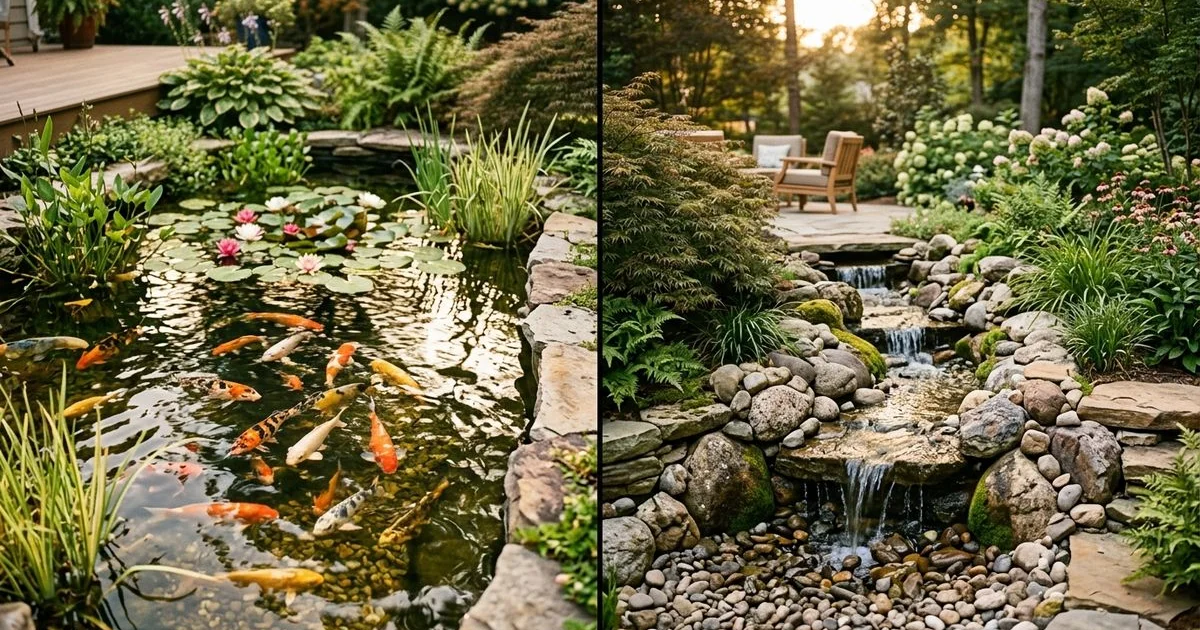
Two Paths to Backyard Tranquility
Few landscape additions rival the sensory impact of water in motion. The sound of a cascade smoothing out the noise of a busy neighborhood, the shimmer of light reflecting off a still surface, the unexpected wildlife drawn to a freshwater source. These benefits explain why water features rank among the most requested backyard upgrades across the country.
The decision facing most homeowners comes down to two fundamentally different approaches. A koi pond creates a living aquatic ecosystem that rewards attentive owners with a dynamic, ever changing environment. A pondless waterfall delivers the auditory and visual charm of moving water with a fraction of the ongoing effort. Both options transform outdoor spaces in the Triangle area, where mild winters and long growing seasons let homeowners enjoy water features nearly year round.
Understanding the true differences in cost, maintenance, space requirements, and lifestyle fit helps you make a choice you will be happy with for years.
The Koi Pond: A Living Ecosystem
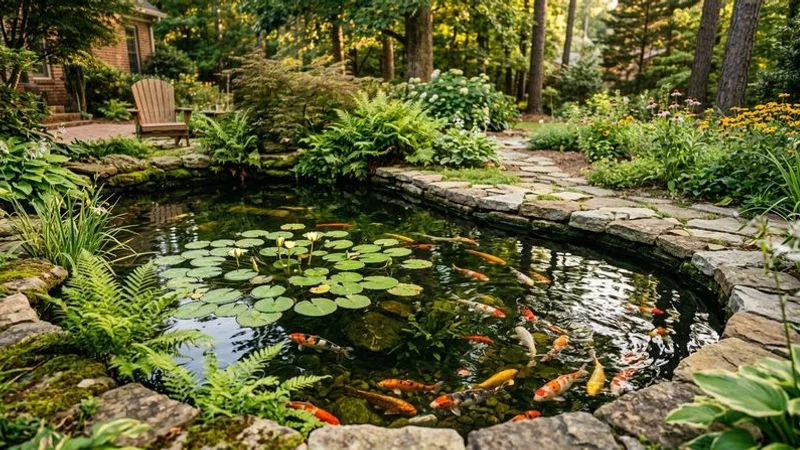
A koi pond is not simply a decorative basin. It functions as a self sustaining aquatic habitat with standing water depths of eighteen inches to three feet, supporting fish, plants, and beneficial microorganisms working together in balance.
What Makes Koi Ponds Compelling
Popular koi varieties like Kohaku and Sanke are remarkably personable fish. They learn to recognize their owners, surface for hand feeding, and bring a dynamic visual element that no static landscape feature can replicate. The pond itself changes character through the seasons, with aquatic plants cycling through growth stages and fish activity shifting with water temperature.
Natural stone edging, often Tennessee fieldstone or similar regional materials, blends the basin seamlessly into surrounding plantings. Aquatic plants like Water Hyacinths and Hardy Water Lilies serve a dual purpose: they add visual texture and actively pull excess nitrogen from the water, reducing algae blooms through natural filtration.
The ecological contribution extends beyond the fish. Frogs, dragonflies, and songbirds are naturally drawn to freshwater sources, creating a micro habitat that connects your property to the broader natural environment. The 2026 National Association of Landscape Professionals report highlights water features among the top requested backyard upgrades specifically for their stress reduction benefits.
Maintenance Demands You Cannot Ignore
Owning a koi pond requires genuine commitment to routine care. Filtration is the foundation of a healthy system. A proper setup combines mechanical filters to trap solid debris with biological filters to process the ammonia that fish produce naturally. High capacity bead filters handle this biological load effectively in larger installations.
Water chemistry monitoring follows a strict, continuous schedule:
- pH Control: Maintaining levels tightly between 7.0 and 8.6 to keep fish healthy.
- Chloramine Neutralization: Treating municipal tap water with a dedicated product like API Pond Stress Coat before adding it to the basin. Untreated tap water is toxic to koi.
- Summer Aeration: Adding supplemental oxygen systems when temperatures exceed 80 degrees to counteract accelerated algae growth and reduced dissolved oxygen.
- Seasonal Transitions: Restarting pumps in spring, netting falling leaves in autumn, and maintaining gas exchange holes through any winter ice formation.
Ignoring any of these parameters invites severe ecosystem damage. Hot, humid Raleigh summers demand particular vigilance because elevated water temperatures stress fish and fuel aggressive algae growth simultaneously.
Installation and Ongoing Costs
Current 2026 data places the national average for a mid sized koi pond at approximately $10,500. Standard installations range from $5,100 to $15,900 depending on basin size, depth, and filtration complexity. A minimum water volume of 1,000 gallons is recommended for maintaining a stable environment for adult koi. Custom projects featuring premium stonework and advanced UV clarifiers can reach $25,000 or more.
Annual operating costs add a significant ongoing expense. Budgeting $1,000 to $2,000 per year covers electricity for continuous pump operation, quality fish food, water treatments, and routine equipment replacements. The fish themselves range from $15 for domestic juveniles to several hundred dollars for imported show quality breeds.
The Pondless Waterfall: Sound Without the Complexity
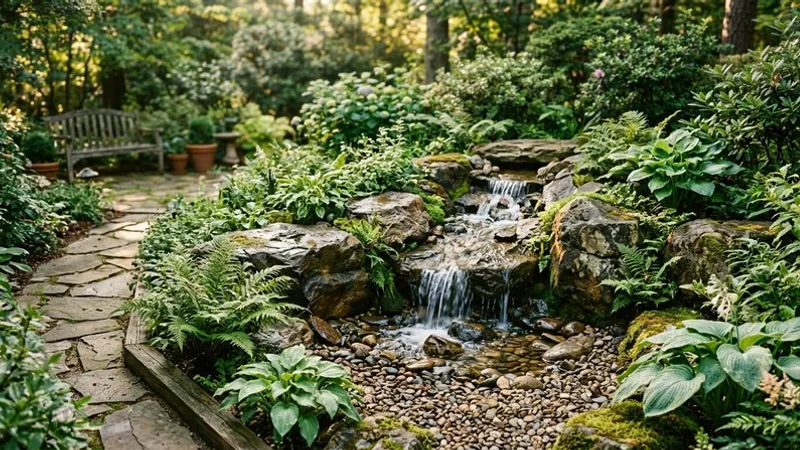
A pondless waterfall delivers the atmospheric benefits of flowing water while eliminating the standing basin entirely. Water cascades over natural stone into a concealed, gravel filled reservoir constructed with modular storage units like AquaBlox. A heavy duty pump recirculates water from the bottom of this hidden basin back to the top of the falls in a continuous closed loop.
The result is constant motion, soothing sound, and visual texture without a visible pool of standing water.
Why Homeowners Choose Pondless
Safety is a primary driver for families with young children or pets. With no deep standing water, the drowning risk associated with traditional ponds is eliminated entirely.
Spatial efficiency makes this option viable on properties that cannot accommodate a full pond. A high impact waterfall can fit in an area as small as four by six feet. These features tuck into unused corners, integrate along retaining walls, or serve as focal points beside entryways. The hidden reservoir occupies minimal visual space, leaving the rest of the yard open for other uses.
Architectural trends in 2026 show growing demand for cascading water features that function as sculptural focal points without dominating the landscape. This approach works particularly well on sloped terrain, turning a grading challenge into a design advantage.
Simplified Ownership
The maintenance contrast with a koi pond is dramatic. There are no fish to feed, no pH levels to balance, and no biological filters to clean. Routine care is limited to a few straightforward tasks:
- Water Level Checks: Summer evaporation claims one to two inches per week. An automatic fill valve connected to your irrigation system eliminates this task entirely.
- Debris Removal: Clearing leaves from the pump filter basket a few times during autumn foliage season.
- Annual Basin Flush: Rinsing the gravel reservoir once per year to remove accumulated sediment.
Modern asynchronous pumps run efficiently on minimal electricity. The system can be shut down entirely during the coldest winter weeks without any risk of damage. This closed loop design redefines outdoor convenience for homeowners who want sensory benefits without adding weekly chores.
Installation and Operating Costs
The national average for a professionally installed pondless waterfall sits around $7,000 in 2026. Standard projects fall between $4,000 and $10,000 depending on stream length, stone selection, and drop height. Entry level designs featuring a modest three foot cascade over natural boulders start near $4,000. Multi tiered installations spanning ten feet or more approach $15,000.
Operating expenses remain remarkably low. Electricity for the recirculating pump costs roughly $10 to $30 per month. Total annual maintenance rarely exceeds $300, making this one of the most economical ways to enjoy moving water in a residential landscape.
Side by Side Comparison
| Factor | Koi Pond | Pondless Waterfall |
|---|---|---|
| Maintenance Time | 30-60 minutes weekly (feeding, filter cleaning, testing). | 15 minutes monthly (checking water levels, clearing debris). |
| Space Required | Minimum 50 sq ft (1,000+ gallons) for healthy fish. | Highly compact; works in spaces as small as 20 sq ft. |
| Safety Profile | Open, deep water requires supervision for kids and pets. | Zero standing water; inherently safe for families. |
| Operating Costs | $1,000 - $2,000 annually (electricity, food, treatments). | $150 - $300 annually (basic pump electricity). |
| Property Value | Mixed impact; appeals to niche buyers, deters others. | Universally positive; seen as low-stress landscaping. |
Matching the Feature to Your Lifestyle
The right decision hinges on an honest assessment of your available time, your interest in aquatic husbandry, and how your household uses the yard.
A koi pond rewards owners who genuinely enjoy the daily ritual of feeding fish, monitoring water chemistry, and observing seasonal changes in a living ecosystem. If the maintenance sounds like a relaxing hobby rather than a burden, a pond delivers an experience that no other landscape feature can match.
A pondless waterfall suits homeowners who travel frequently, prefer minimal yard maintenance, or simply want the ambient sound of flowing water without ongoing obligations. It also serves as an ideal starting point for smaller properties in Raleigh where space is limited but the desire for a water element is strong.
Both options deliver the soothing presence of water and meaningfully enhance property appeal. The question is whether you want to nurture a living habitat or simply enjoy the atmosphere that moving water creates.
Explore Your Water Feature Options
Hardscapes Raleigh connects homeowners with experienced water feature professionals who understand the soil conditions, climate patterns, and design possibilities specific to the Triangle area. A site evaluation helps determine the right scale, placement, and style for your property.
Every landscape holds potential for a striking aquatic addition. Schedule a design consultation to start the conversation about bringing the beauty and tranquility of water to your outdoor space.