Backyards across the Triangle area are evolving far beyond the basic concrete slab. Property owners in Raleigh, Cary, and Apex are investing in exterior spaces that function as genuine extensions of the home, complete with cooking stations, conversation zones, and climate-adapted materials that hold up through every season.
This shift makes practical sense. The region averages over 210 sunny days per year, and mild winters allow fire features to keep outdoor rooms comfortable from March well into November. A strategic layout transforms a simple yard into a year-round asset that delivers daily value.
Here are the design approaches producing the best results for properties in the Triangle right now.
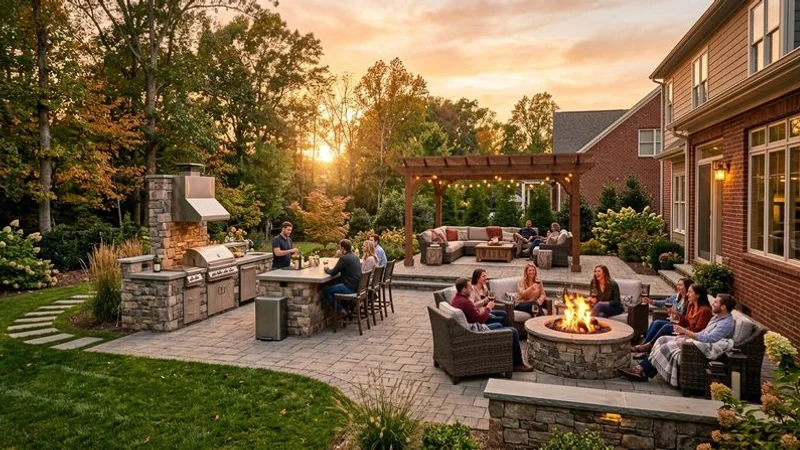
Covered Outdoor Rooms That Extend Your Square Footage
A covered outdoor room is one of the most cost-effective ways to add usable living space without the extreme expense of a fully enclosed addition. A substantial roof structure shields the area from sudden summer thunderstorms and blocks harsh afternoon sun, keeping the space functional during conditions that would otherwise send everyone back inside.
Motorized louvered models allow you to open or close the roof with a remote control, giving you full authority over sunlight and ventilation throughout the day. Weather-rated televisions, like SunBrite models, are increasingly common in these covered spaces, letting homeowners watch evening games without worrying about humidity damage.
The right overhead structure depends on your goals and budget.
| Structure Type | Average Cost Impact | Best Feature |
|---|---|---|
| Timber-Framed Pavilion | High | Full rain protection and built-in lighting. |
| Motorized Louvered Pergola | Medium-High | Adjustable shade and rain sensing automation. |
| Classic Open Pergola | Moderate | Excellent airflow and support for climbing vines. |
Wake County regulations require a permit for any detached accessory structure exceeding 12 feet in any dimension, so confirming compliance with local engineering standards for wind and snow loads is essential before construction begins.
Organizing Larger Yards into Functional Zones
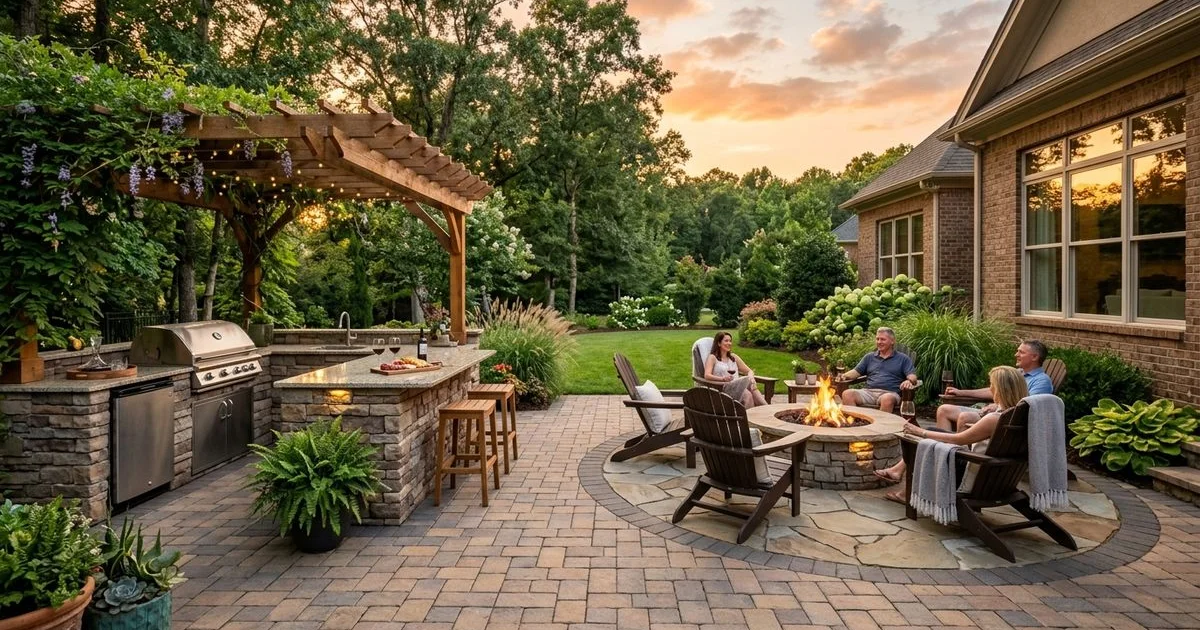
Sprawling backyards in neighborhoods like Wakefield, Bedford, and Brier Creek benefit enormously from being divided into distinct functional zones rather than built out as a single massive patio. Properties with a quarter acre or more provide enough room to separate active cooking spaces from quieter relaxation areas.
Contrasting hardscape products, such as pairing concrete pavers with natural stone borders, create visual boundaries between zones and prevent the space from feeling monotonous. Strategic planting with drought-resistant native plants softens the transitions and builds natural privacy screens without increasing water bills.
A well-organized multi-zone layout typically includes four distinct areas.
- The Cooking Hub: Positioned closest to the house for easy utility access.
- The Dining Area: Placed under partial shade with enough room to pull out chairs comfortably.
- The Lounge Space: Designed for conversation with seating oriented away from the afternoon sun.
- The Fire Destination: Pushed furthest into the yard to draw guests outward into the landscape.
Elevated Patios That Work with the Terrain
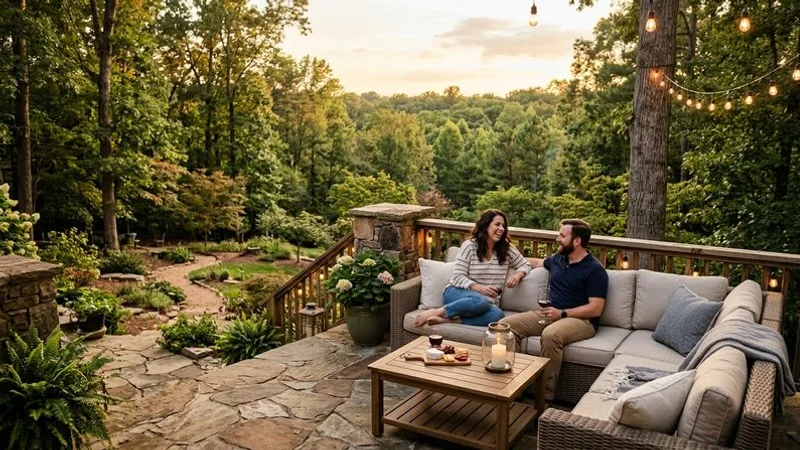
The rolling terrain found throughout the Triangle creates both challenges and opportunities. An elevated patio takes advantage of natural grade changes to offer commanding views of the surrounding tree line, turning a sloped yard into a genuine asset rather than a drainage headache.
Building on Clay Soil
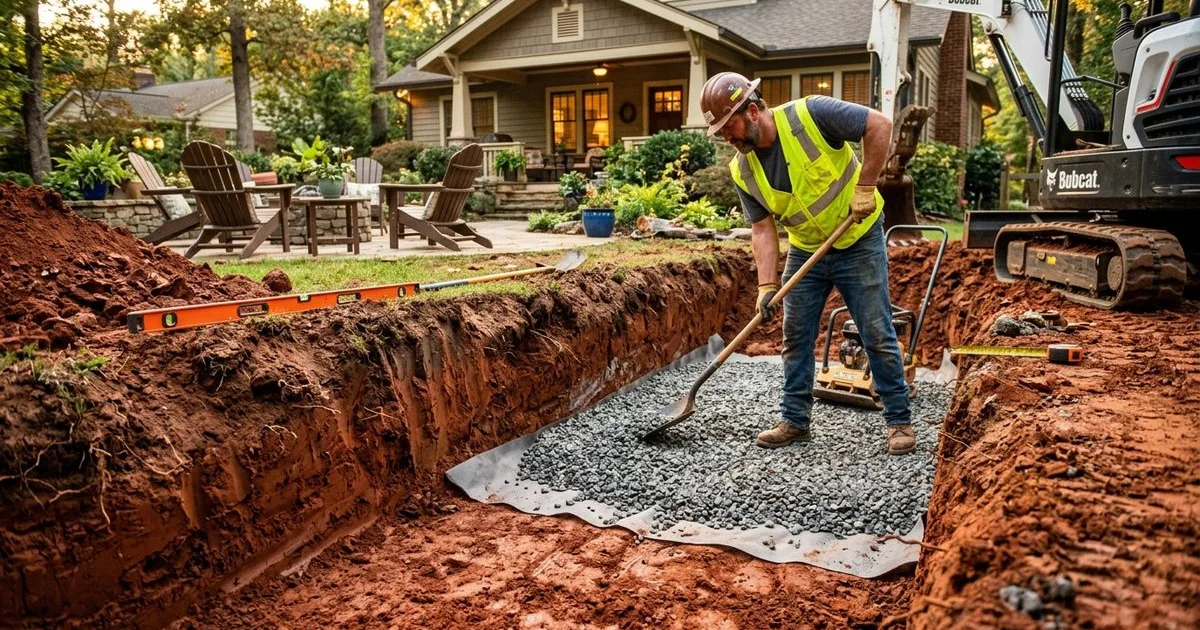
The dense red clay found across Wake County expands significantly when wet and shrinks during dry spells, putting constant pressure on retaining walls and foundations. Proper construction requires extensive gravel backfill, heavy rebar reinforcement, and drainage pipes routing water entirely away from the wall base. Rebar reinforcement typically adds $0.80 to $1.70 per square foot, but it is essential for structural longevity. The exterior faces can be finished with segmented retaining blocks or natural stone veneer, transforming a structural necessity into a beautiful focal point.
Wake County enforces building codes strictly for retaining walls supporting five feet or more of soil, so submitting detailed engineering drawings is part of the process.
Outdoor Cooking Destinations
Permanent masonry islands equipped with professional-grade built-in appliances have replaced the basic wheeled grill for homeowners serious about outdoor cooking. Brands like Twin Eagles and FireMagic provide the precise temperature control needed for recipes that go well beyond burgers and hot dogs.
Current 2026 data shows a standard built-in setup averaging around $16,473, while luxury builds can easily exceed $40,000. A recent National Association of Realtors report indicates that homeowners can recover up to 100% of their outdoor kitchen costs at resale, making the investment a strong financial decision in addition to a lifestyle upgrade.
A truly independent outdoor kitchen needs these core features.
- Extensive Prep Space: At least three feet of uninterrupted counter space adjacent to the grill.
- Dedicated Refrigeration: Under-counter stainless steel units keeping beverages and ingredients at safe temperatures.
- Sanitation Stations: Deep stainless sinks connected to main plumbing for easy cleanup.
- Task Lighting: Focused illumination directly over the cooking grates for late evening meals.
Combining Water Features and Fire Elements
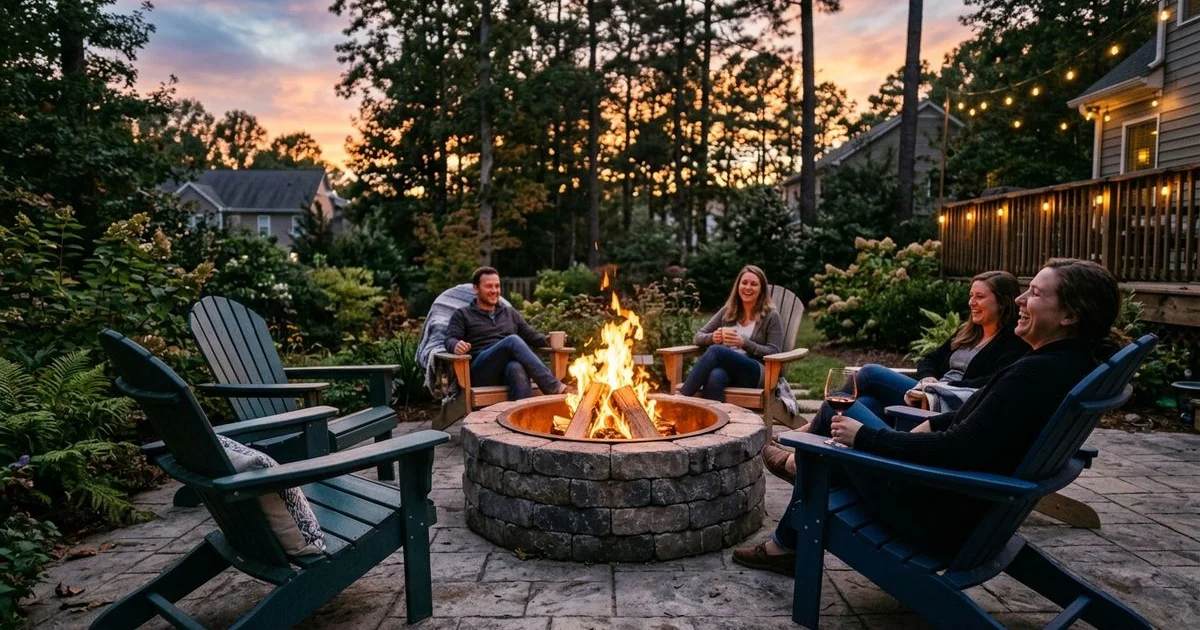
The crackling warmth of a fire pit paired with the soothing sound of moving water creates a multisensory environment that anchors opposite ends of a large patio beautifully. Gas burner systems, such as Warming Trends crossfire brass burners, produce taller, brighter flames while consuming less fuel than standard steel rings. A system generating between 100,000 and 150,000 BTUs is typically needed to provide genuine comfort during cooler months.
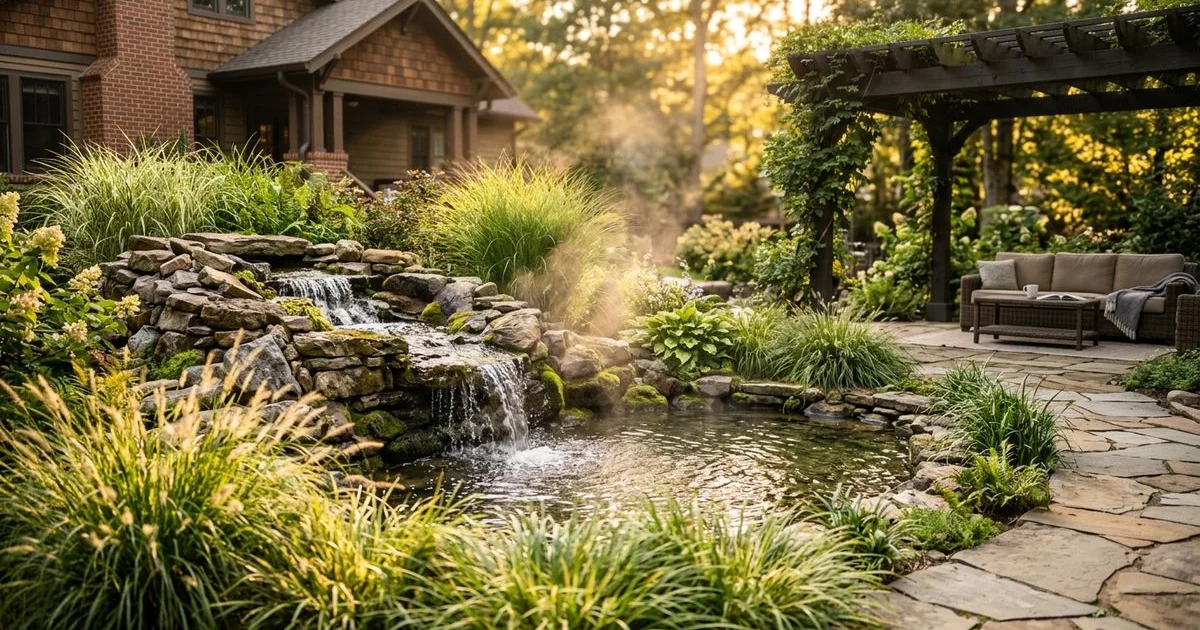
Pondless waterfalls powered by heavy-duty pumps deliver the ambient sound of cascading water without the maintenance burden of a traditional koi pond.
| Feature Category | Primary Benefit | Maintenance Level |
|---|---|---|
| Natural Gas Fire Pit | Instant heat and evening ambiance. | Very Low |
| Wood-Burning Fireplace | Authentic campfire smell and crackle. | Moderate (Ash cleanup) |
| Pondless Waterfall | White noise to block street traffic. | Low (Seasonal filter checks) |
Materials That Minimize Weekend Maintenance
A stunning exterior space should not add a second job to your weekend schedule. Selecting the right engineered materials from the start is the key to achieving that balance. Composite decking boards and durable porcelain pavers resist fading, staining, and insect damage without ever requiring a coat of sealant.
Furniture choices matter just as much. The intense summer humidity and occasional winter freezes in North Carolina will destroy cheap plastics and untreated woods quickly. Heavy-duty teak or high-density synthetic wicker maintains structural integrity and color vibrancy for decades with nothing more than a seasonal wash.
The most effective material swaps for a low-effort yard include the following.
- Swap Natural Wood for Composite: Eliminate the need for sanding and staining entirely.
- Swap Mulch for River Rock: Prevent annual top-dressing in heavily shaded areas.
- Swap High-Maintenance Lawns for Hardscaping: Expand the patio footprint and reduce weekly mowing.
Landscape Lighting for Evening Enjoyment
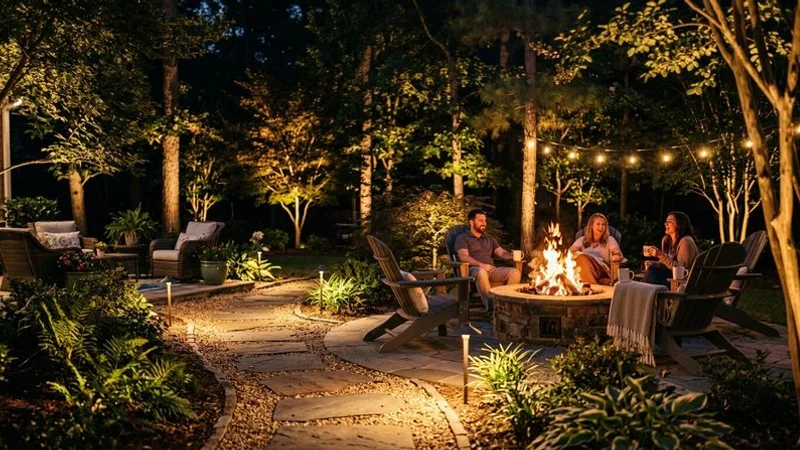
Professional landscape illumination determines whether your outdoor investment is usable for five months of the year or all twelve. Sealed brass fixtures with a minimum IP68 waterproof rating, from manufacturers like VOLT or Kichler, block out moisture and dirt completely. Modern LED technology consumes a fraction of the electricity that old halogen bulbs required while lasting well over a decade.
Smart systems allow management of individual lighting zones from a smartphone app, with the ability to shift color temperature from a crisp 5000K daylight to a warm 2700K glow for evening entertaining.
- Path Illumination: Downward-facing lights guiding foot traffic safely along stone walkways.
- Under-Cap Glow: Hidden LED strips under seating walls providing soft, indirect ambiance.
- Task Focused: Brighter, targeted fixtures positioned directly above cooking grates and prep counters.
Bringing Your Outdoor Vision to Life
The best backyard design transformations begin with a clear vision of how the space will be used daily. Hardscapes Raleigh connects homeowners throughout the Triangle with vetted professionals who understand local soil, climate, and municipal requirements.
Every material choice and layout decision should support your long-term lifestyle goals. Schedule a design consultation and take the first step toward an outdoor living space that works as hard as the rest of your home.