Budgeting for a new patio can feel like trying to hit a target that keeps moving. Material costs shift from year to year, labor rates fluctuate with demand, and site conditions vary dramatically from one property to the next.
This 2026 Price Guide breaks down the real numbers behind patio installations in Raleigh and the surrounding Triangle area, so you can plan with confidence rather than guesswork.
The 2026 average for a professionally installed patio in this market lands between $8,500 and $12,000, with a broader range of $4,500 to $18,000 depending on the scope, materials, and site complexity. Those figures represent everything from standard builder-grade slabs to surfaces engineered to perform for decades in Wake County’s clay-heavy soil.
What Material Selection Does to Your Budget
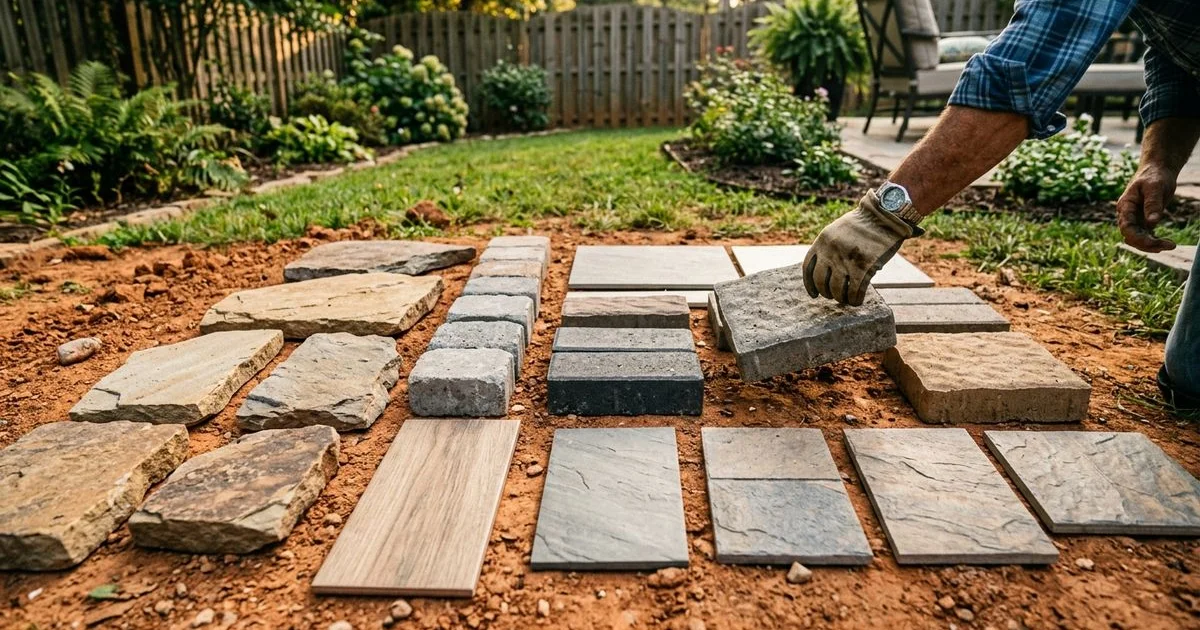
The surface material you choose has the single largest impact on total project cost. Prices shift drastically between basic concrete, mid-range pavers, and premium natural stone.
Concrete Pavers
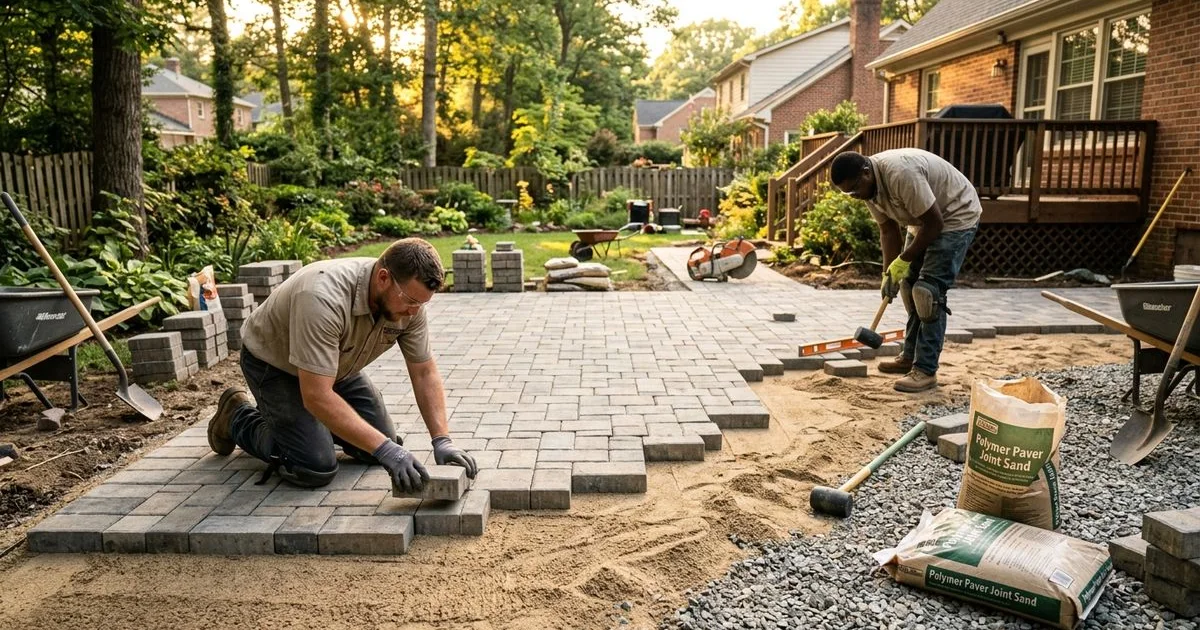
Concrete pavers remain the most popular choice for patios across the Triangle because they balance durability with reasonable cost. Standard concrete pavers typically run between $12 and $22 per square foot installed, including base preparation, edge restraints, and polymeric sand.
Premium brands like Belgard, Tremron, and Pavestone push the price toward the higher end of that range. Popular systems such as Belgard’s Dimensions series or the Appian Stone line land at $18 to $25 per square foot once fully installed.
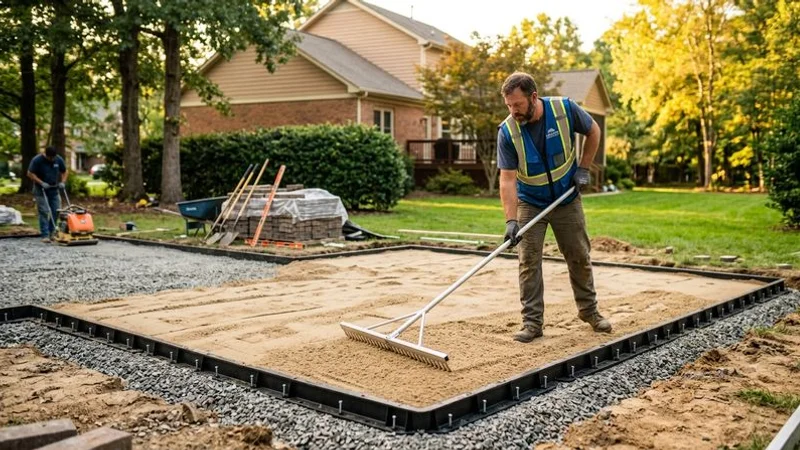
A standard 300-square-foot patio using mid-range pavers usually falls between $4,800 and $6,600. The materials themselves only account for $3 to $7 of the per-square-foot rate; labor and base preparation make up the remainder, ensuring the ground is stable before the first block is placed.
Natural Stone
Natural stone brings character that manufactured products cannot replicate, though it carries a larger upfront cost. These materials generally run between $20 and $40 per square foot installed.
Bluestone remains the most sought-after option in the region at $25 to $38 per square foot. Travertine and limestone fall in a similar range. Locally sourced Carolina fieldstone offers a more cost-effective alternative at $18 to $30 per square foot.
A 300-square-foot bluestone patio typically runs between $7,500 and $11,400. The higher cost reflects the specialized labor required to cut and set irregular, heavy pieces with tight joints and a perfectly level surface.
Flagstone
Flagstone set in a sand or gravel base (dry-laid) ranges from $15 to $28 per square foot installed. Wet-laid flagstone set in mortar on a concrete slab costs more, typically $22 to $35 per square foot, but prevents stones from shifting over time. For homeowners who want a permanent surface with natural character, the mortar-set method is the stronger long-term investment.
Stamped Concrete
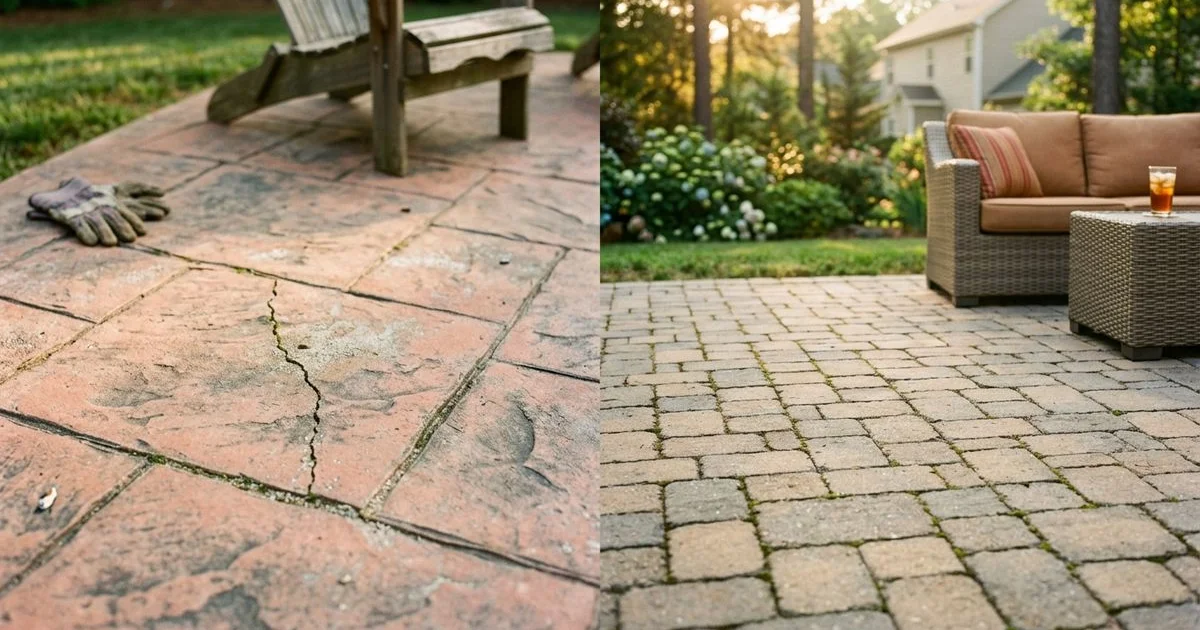
Stamped concrete offers a budget-friendly alternative at $10 to $20 per square foot. However, the surface requires commercial-grade sealer every two to three years to prevent UV-related color fading. Our detailed stamped concrete vs paver patio analysis covers this comparison in depth.
How Project Size Affects the Final Bill
The footprint of your patio dictates the total cost just as much as material selection. Volume pricing often produces a slight decrease in per-square-foot rates on larger projects, since fixed costs like equipment mobilization and crew travel spread more efficiently over a bigger area.
| Patio Size | Square Footage | Typical Cost Range (Mid-Range Pavers) | Common Use Case |
|---|---|---|---|
| Small | 150 sq. ft. | $2,400 - $3,900 | Bistro table and two chairs |
| Medium | 300 sq. ft. | $4,800 - $7,800 | Dining set and lounge seating |
| Large | 500+ sq. ft. | $8,000 - $13,000+ | Full outdoor entertaining and fire pit |
Significant grading or complex drainage requirements on larger footprints can offset those volume savings, so a site assessment is essential before finalizing the budget.
Site-Specific Costs That Catch Homeowners Off Guard
Beyond surface materials, several factors unique to your property can push the final price higher than initial estimates.
Excavation and Clay Soil Preparation
The dense red clay found throughout Wake County expands and contracts aggressively with seasonal moisture changes. Proper installation demands excavating down through the clay layer and laying a minimum of six to eight inches of compacted ABC gravel as a stable base. Properties with significant slopes may require extensive regrading, adding $1 to $3 per square foot to the preparation cost.
Drainage Infrastructure
Heavy Carolina rainstorms can wash out an inadequate base within a single season. Channel drain systems, such as NDS 400 Spee-D or the slimmer NDS Micro Channel, capture and redirect surface runoff before it undermines the patio. Adding a proper channel or French drain system adds $500 to $2,500 to the project depending on the length of piping required.
Retaining Walls and Steps
Properties in North Hills, Five Points, and Inside the Beltline frequently feature sloping terrain that requires structural support. Segmental retaining walls prevent erosion and create a level footprint for pavers, typically adding $1,500 to $5,000 to the total. A set of matching paver or stone steps usually costs an additional $500 to $2,000.
Complex Design Elements
Simple rectangular layouts maximize material budgets and minimize labor. Curves, multi-level terraces, and built-in features require precision cuts and generate 10 to 15 percent material waste. Patios with contrasting borders, circular fire pit seating, or built-in planter walls can cost 15 to 25 percent more than a straight-edged layout of the same total area.
Permit Requirements
Most basic, ground-level hardscaping does not require formal county approval. Wake County does not mandate a building permit for standard patio projects unless they involve load-bearing structures, electrical work, or plumbing lines. Local zoning setback requirements still apply regardless. Permit fees generally range from $100 to $500 when structural or utility work triggers the requirement.
Strategies for Getting the Best Value
Maximizing your budget starts with securing at least three detailed, written estimates from established local contractors. Bids that come in drastically below the market average often indicate that a contractor plans to skip crucial base preparation steps outlined by the Interlocking Concrete Pavement Institute (ICPI).
Timing and Phased Construction
Raleigh’s mild winters allow hardscape construction to continue from November through early spring. Contractors face fewer scheduling bottlenecks during these months and occasionally offer more competitive pricing as a result.
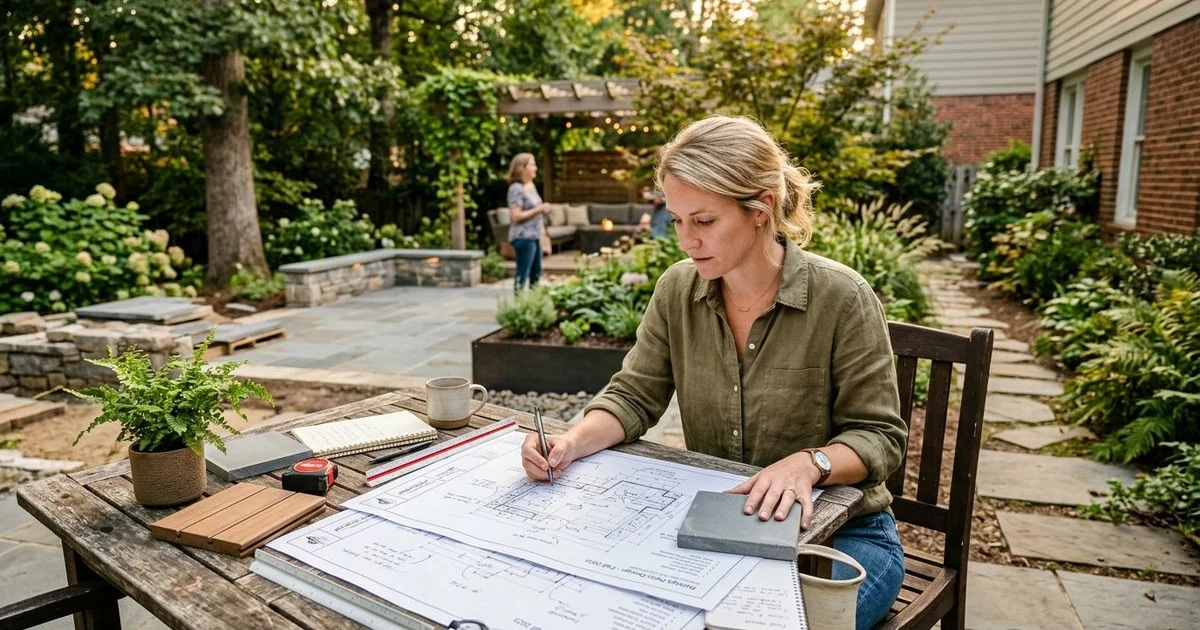
Phased construction is another effective strategy. Install the primary seating area this year, then add an outdoor kitchen or seating wall during the next season. A skilled patio designer will draft a master plan that accommodates future gas lines or footings without forcing you to tear up existing work later.
Regional Advantages That Affect Pricing
Proximity to North Carolina’s mountain quarries provides a distinct cost advantage for natural stone. Materials like Carolina fieldstone or Rowan County granite cost significantly less than imported stones shipped from across the country. The Triangle area’s high volume of residential construction sustains dozens of qualified hardscape crews, keeping labor rates competitive.
The Financial Return on Your Patio Investment
Outdoor living upgrades consistently deliver strong financial returns in the residential improvement sector. Recent 2025 data from the National Association of Realtors confirms that a properly engineered paver or concrete patio routinely recovers up to 95 percent of its installation cost at resale.
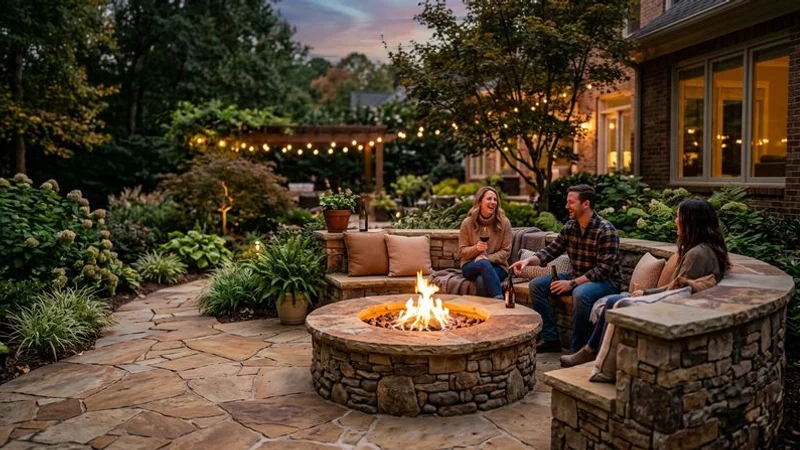
The climate in this region allows residents to use outdoor spaces eight to ten months out of the year. Adding a covered pergola or integrated fire pit transforms a basic patio into a genuine extension of the home’s living area, further increasing its appeal to future buyers.
Get an Accurate Estimate for Your Property
Every yard presents unique topographical challenges and design possibilities. A professional site assessment is the only reliable way to calculate an exact price for your specific conditions.
Hardscapes Raleigh connects homeowners across the Triangle with vetted professionals who provide comprehensive custom patio design and installation services. A careful inspection of soil conditions and slope measurements ensures a proposal that matches your financial expectations.
Schedule a free design consultation and take the guesswork out of your upcoming patio project.