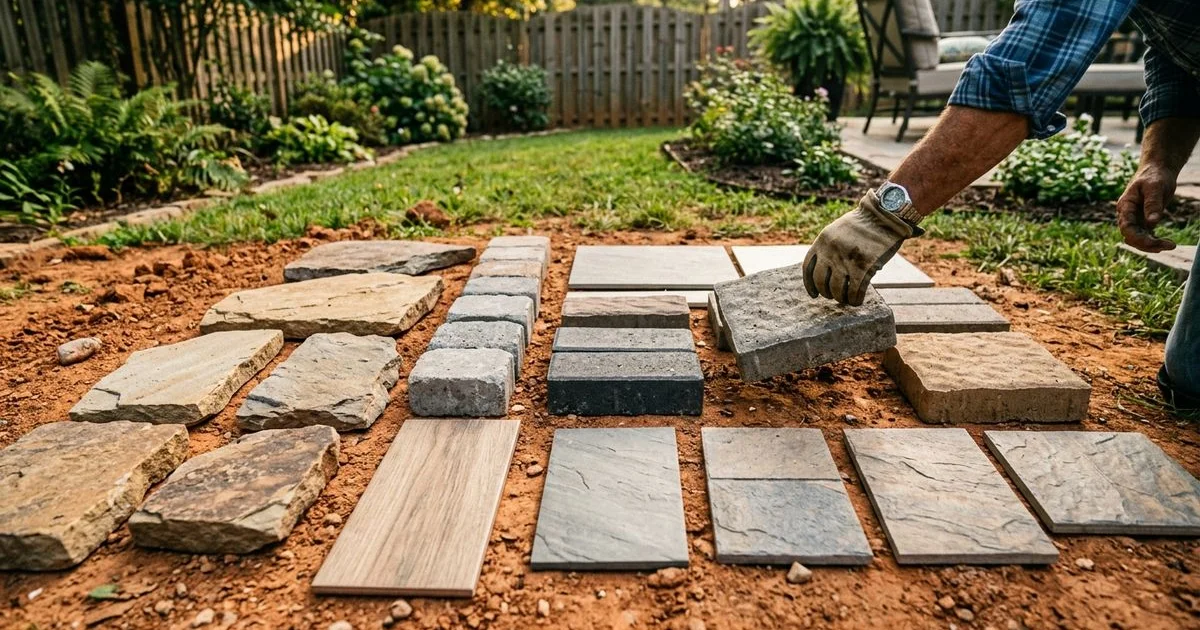
Why Material Selection Matters in This Climate
Every outdoor surface in North Carolina faces a tough combination of heavy rainfall, intense summer heat, and occasional winter freezes. The Raleigh area absorbs over 43 inches of rain annually, with August frequently delivering the heaviest downpours. A material must perform just as well during a humid, 95-degree July afternoon as it does during a freezing January night.
Choosing the wrong surface leads to premature cracking, color fading, and expensive repairs. This guide breaks down the performance data for the most popular options and provides practical guidance for matching materials to your specific property.
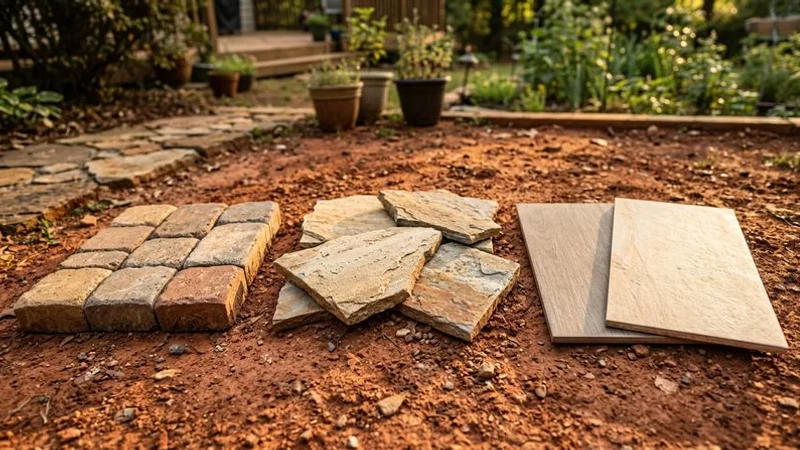
Concrete Pavers: The Versatile Workhorse
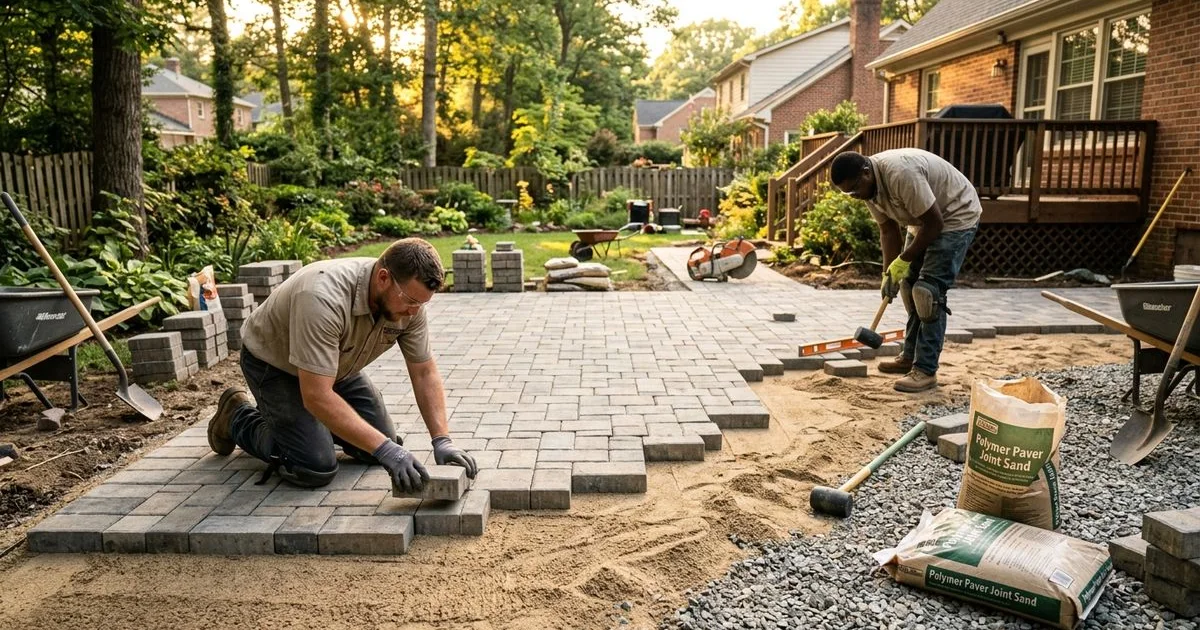
Concrete pavers consistently rank as the top choice for North Carolina properties. Modern pavers have evolved far beyond basic rectangular blocks. Manufacturers now produce tumbled finishes mimicking aged stone, large-format slabs for contemporary designs, and permeable systems engineered for stormwater management.
Performance in NC Weather
The interlocking design provides a key structural advantage. A paver patio flexes slightly with the soil as ground temperatures fluctuate. When freezing temperatures hit in January, individual units accommodate minor ground shifts without surface cracking.
Pavers also handle the region’s heavy annual rainfall effectively. The joints allow water to infiltrate the sub-base, reducing pooling and surface runoff compared to solid slab materials.
Durability Specifications
Products from industry leaders like Belgard and Tremron meet strict ASTM C936 standards, requiring a minimum compressive strength of 8,000 PSI. Many modern units exceed 9,000 PSI. These high-density units boast a maximum water absorption rate of just 5%, meaning they easily survive 50 or more freeze-thaw cycles without surface degradation.
The primary aesthetic concern involves gradual, even color fading due to UV exposure over many years. This creates a softer, weathered appearance rather than localized damage.
Maintenance
Paver maintenance requires consistent but manageable effort:
- Weed Control: Inspect joints monthly during the spring growing season.
- Algae Removal: Pressure wash shaded areas periodically to clear humidity-driven algae.
- Surface Protection: Apply a quality penetrating sealer every two to three years.
Installed Cost
Concrete pavers typically run between $12 and $25 per square foot installed in the Triangle market. For a comprehensive breakdown of installation factors, review our patio cost guide.
Natural Stone: Timeless Elegance
Natural stone represents the premium tier of outdoor hardscaping. Bluestone, travertine, limestone, and locally quarried fieldstone each bring characteristics that manufactured products cannot perfectly duplicate.
Bluestone
Pennsylvania bluestone serves as the premier natural stone choice across the Southeast. The blue-gray color palette pairs perfectly with both traditional and modern architecture. A natural cleft finish provides excellent slip resistance, making it practical for pool surrounds and rain-exposed areas.
Bluestone’s low absorption rate resists moisture penetration and prevents structural damage during winter freezes. Periodic sealing remains necessary to prevent organic staining from pollen and fallen leaves.
Travertine
Travertine reflects sunlight and stays up to 20% cooler underfoot than concrete or bluestone during hot July afternoons. This cooling effect provides a massive comfort advantage for barefoot areas around swimming pools.
The main challenge involves natural porosity. If you live in an area with freeze-thaw cycles, specify “Premium Select” grade travertine. Standard grades contain larger voids that hold water, leading to surface popping when temperatures drop below freezing. A penetrating sealer applied every one to three years is mandatory.
Local Carolina Fieldstone
Quarries in western North Carolina produce exceptional materials at competitive prices. “Hooper’s Creek Gray” from Fletcher and “Pisgah Gray” from McDowell County offer gorgeous, rustic aesthetics at a lower cost than imported stone. Local sourcing eliminates heavy freight costs and supports regional businesses.
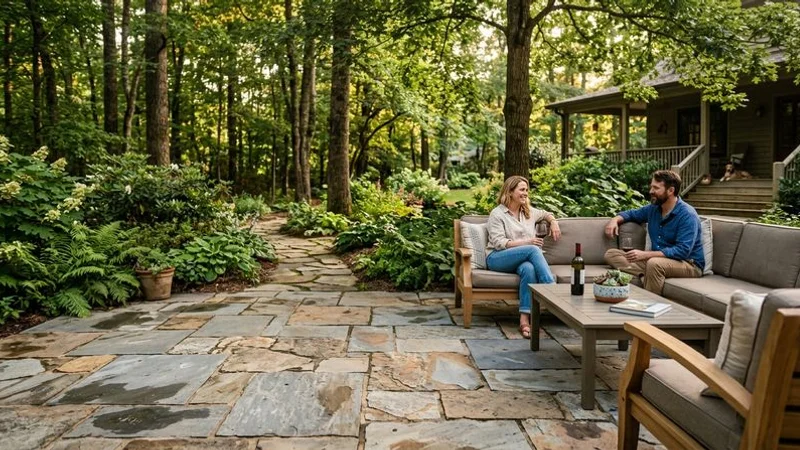
Flagstone: Rustic Charm with Installation Options
Flagstone consists of flat, irregularly shaped stones fitted together like a puzzle. The natural geometry creates a visually striking surface that complements the lush greenery common throughout the region.
Dry-Laid Flagstone
Dry-laid installation uses compacted sand, gravel, or decomposed granite between the stones instead of wet mortar. This method costs less upfront and accommodates natural soil expansion and contraction. Many homeowners plant ground covers like creeping thyme or Irish moss in the gaps for a living patio effect.
Maintenance is the primary drawback. Organic joints invite aggressive weed growth during spring and summer, and stones will inevitably shift in the heavy clay soils found across Wake County.
Mortared Flagstone
Setting flagstone in mortar over a concrete slab creates a permanent, stable surface that eliminates shifting and weed growth. A properly installed mortared surface can last 30 years or more. The trade-off is that any cracking in the underlying slab transfers directly through the stone.
Cost Comparison
| Installation Method | Average Cost Per Square Foot | Primary Benefit |
|---|---|---|
| Dry-Laid Flagstone | $15 to $28 | Lower initial cost, flexible |
| Mortared Flagstone | $22 to $35 | 30+ year lifespan, no weeds |
Stamped Concrete: Budget-Friendly with Caveats
Stamped concrete appeals to homeowners by offering the appearance of premium materials at a reduced price point. Imprinting tools press patterns into freshly poured concrete to replicate brick, slate, or wood planking.
Pricing
Stamped concrete typically runs between $12 and $20 per square foot in the local market, offering a middle ground between standard poured concrete ($4 to $8 per square foot) and premium stone.
Freeze-Thaw Reality
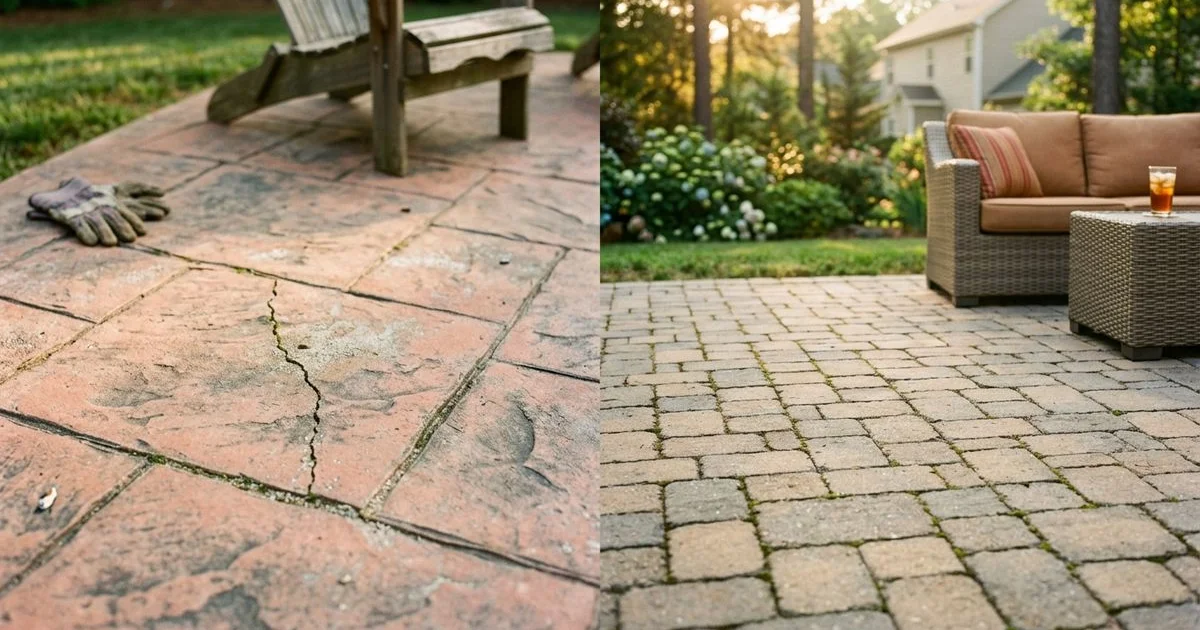
Occasional freeze-thaw cycles cause trapped moisture inside the concrete to expand, inevitably creating surface cracks over several seasons. Unlike a modular paver system where a single damaged unit can be swapped out, repairing stamped concrete requires patching. Patch material rarely matches the sun-faded color of the original, leaving a visible scar.
Surface Safety
Acrylic sealers used to protect the colored surface become slippery when wet. Anti-slip grit can be mixed into the sealer, but this layer wears off quickly. For a detailed breakdown of these differences, read our analysis of stamped concrete versus paver patios.
Porcelain Pavers: The Modern Contender
Porcelain pavers represent a growing segment in the high-end hardscaping market. These kiln-fired clay units are engineered specifically for structural outdoor use at a typical 20mm thickness.
Performance
- Near-Zero Absorption: Water absorption below 0.5% makes the surface virtually impervious to freezing damage and organic stains.
- High Slip Resistance: Quality outdoor porcelain carries an R11 slip resistance rating, excellent for pool surrounds.
- Color Stability: The fired surface ignores UV rays. The color will never fade.
Installation and Cost
Expect to pay between $25 and $45 per square foot for a completed project. Porcelain units are thinner and more brittle during cutting than concrete, requiring specialized diamond blades and a perfectly level, stable base.
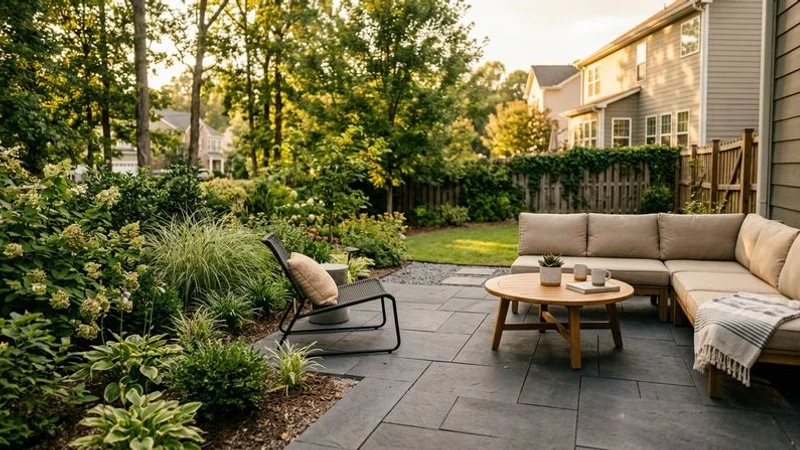
Material Comparison at a Glance
| Material | Durability in NC | Maintenance Level | Long-Term Value |
|---|---|---|---|
| Concrete Pavers | Excellent | Medium | High |
| Natural Stone | Excellent | High | High |
| Porcelain Pavers | Excellent | Very Low | Moderate (High initial cost) |
| Stamped Concrete | Moderate | High (Frequent sealing) | Low (Costly repairs) |
Concrete pavers and natural stone deliver the highest durability ratings, easily handling temperature swings, heavy rainfall, and constant humidity. Porcelain wins for maintenance, requiring nothing more than an occasional sweep and rinse. Over a 20-year timeline, concrete pavers generally provide the best return on investment.
Climate Factors Specific to NC
Pollen season coats every outdoor surface in a thick layer from March through May. Smoother, sealed surfaces make spring cleaning far easier. Heavily textured or unsealed porous stones trap pollen in tiny crevices and require aggressive scrubbing.
The region’s humidity promotes algae and mold growth in shaded areas. Lighter materials highlight green growth immediately, while darker stones hide it visually but become slippery if ignored.
The famous red clay soil contains heavy iron deposits that act as a natural dye. If your patio borders bare soil, heavy rain will wash red mud onto the edges. Proper landscape borders, French drains, and thick mulch beds prevent permanent clay stains on lighter paving materials.
Start Planning Your Perfect Patio
Selecting the ideal surface requires balancing aesthetics, budget, and maintenance willingness. The craftsmanship of the installation matters just as much as the material itself. An expertly installed concrete paver will outlast a poorly laid premium travertine slab every time. Partnering with an experienced patio builder who understands local soil compaction and grading techniques is the single most important choice you will make.
Schedule a free design consultation today to view material samples in person and get expert guidance tailored to your property.