The Financial Case for Outdoor Living
A backyard renovation is one of the largest single investments a homeowner can make outside of the house itself. Before committing thousands of dollars to a paver patio, outdoor kitchen, or fire pit installation, the natural question arises: will this money come back at resale? The short answer, backed by 2025 and 2026 market data, is yes. Exterior improvements consistently deliver stronger returns than many interior remodels when they are planned carefully and built to a high standard.
Raleigh sits in a climate that supports outdoor living roughly eight to ten months each year. That extended usability means buyers in the Triangle area place real value on finished outdoor spaces. The sections below break down which specific projects offer the strongest financial returns and how to avoid the common mistakes that erode ROI.
What Recent Market Data Reveals
The 2025 Cost vs. Value Report by Zonda confirms that exterior projects dominate the top of the ROI rankings. Eight of the ten highest returning improvements are exterior replacements or upgrades. The National Association of REALTORS 2024 Remodeling Impact Report adds further clarity for the Southeast region:
- Landscape maintenance recovers 104 percent of its cost at resale.
- Wood deck additions recoup approximately 89 percent.
- Outdoor living upgrades generate a 68 percent increase in owners wanting to remain in their homes.
These figures represent broad market averages. Your specific return depends on material quality, neighborhood context, and how well the project integrates with the existing home. The data leaves little doubt that well executed outdoor improvements are financially sound in markets with long outdoor seasons.
Projects Ranked by Return Potential
Not every outdoor feature delivers the same financial payoff. The breakdown below ranks the most common projects by their combination of cost recovery and buyer appeal.
Paver Patios: Foundational Value
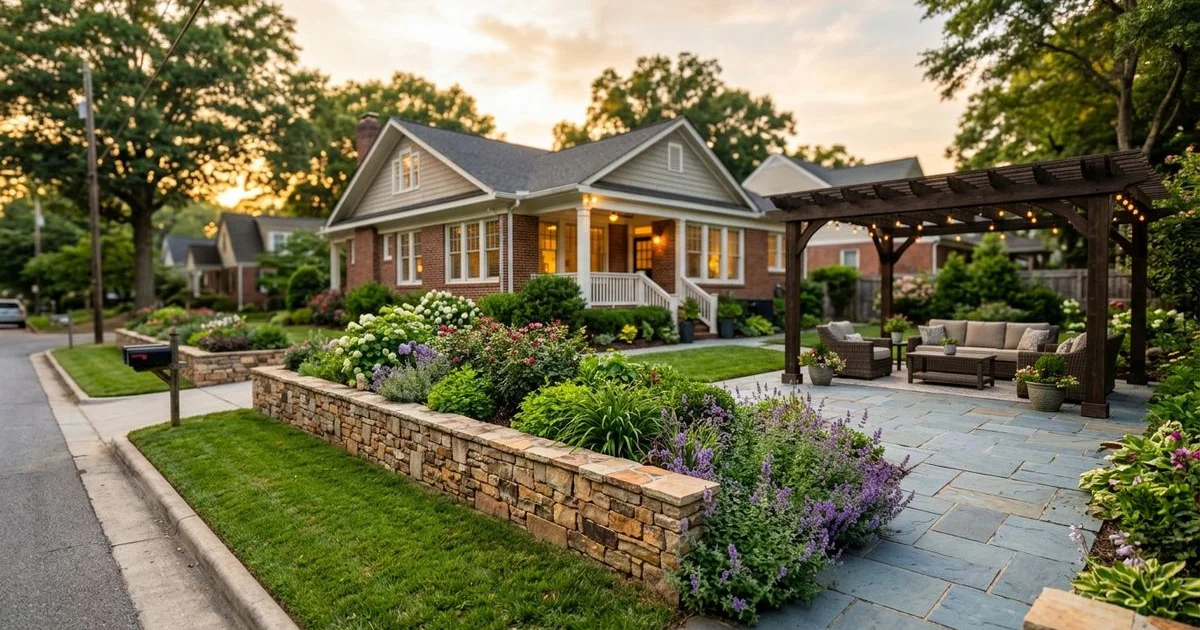
A quality patio creates functional outdoor square footage at a fraction of indoor construction costs. Indoor square footage in desirable Raleigh neighborhoods commands $200 to $350 per square foot, which makes outdoor additions a compelling value proposition.
Angi’s 2026 data places paver installation between $8 and $25 per square foot. A 400 square foot patio averages $4,800 to $16,000 depending on materials. Real estate professionals consistently report that homes with attractive hardscaping sell faster than comparable listings without it.
| Paver Material | Estimated Cost (per sq ft) | ROI & Durability Factor |
|---|---|---|
| Concrete Pavers | $5 - $15 | Budget-friendly, highly versatile, and functional. |
| Brick Pavers | $8 - $20 | Classic aesthetic with moderate maintenance needs. |
| Natural Stone | $15 - $50 | Premium durability with the highest perceived luxury value. |
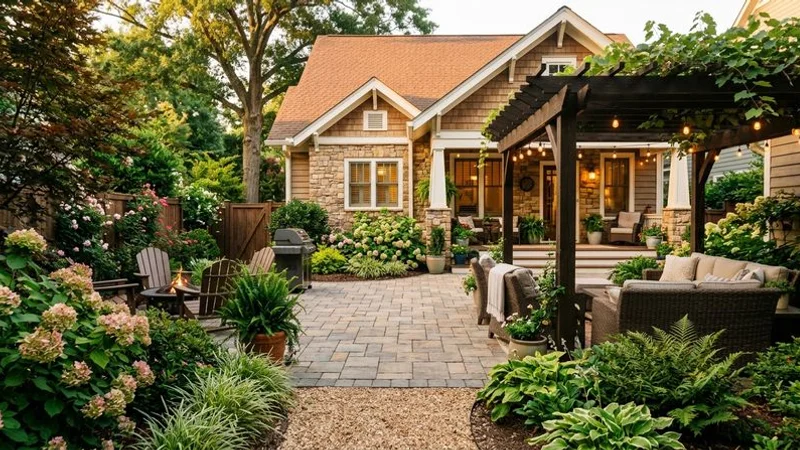
The critical factor for maximizing patio ROI is integration. A surface that flows naturally from indoor living spaces through glass doors delivers far more value than a disconnected slab sitting in the middle of the yard.
Landscape Lighting: The Value Multiplier
Professional lighting is one of the most cost effective upgrades available. A comprehensive lighting package runs $3,000 to $8,000, and the NAR estimates returns of 50 to 70 percent on that investment. More importantly, lighting amplifies the perceived value of every other outdoor feature you have already installed.
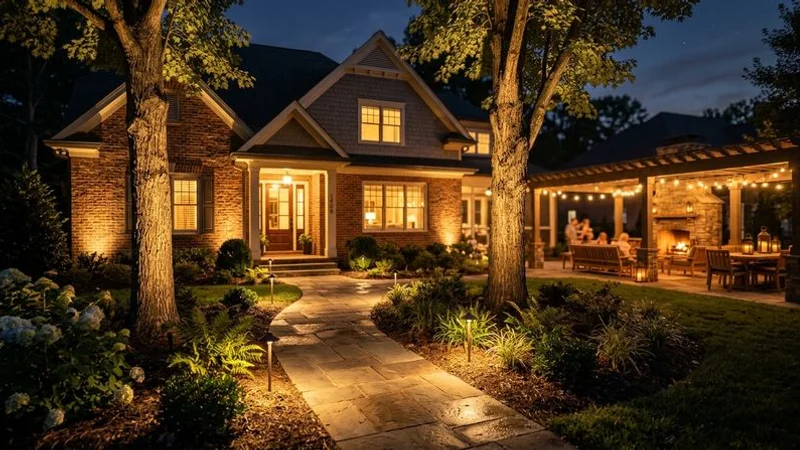
Design trends for 2025 and 2026 emphasize warmer color temperatures. LEDs in the 2700K to 3000K range mimic a soft sunset glow that creates a luxurious, inviting atmosphere. A pleasant daytime patio becomes a dramatic entertaining venue after dark. Mature trees transform into sculptural focal points when properly uplighted. High efficiency LED fixtures keep energy costs low while maintaining bright, safe pathways.
Fire Features: Emotional Impact at the Showing
Fire pits and outdoor fireplaces generate a response from buyers that transcends pure financial calculation. During home showings, a glowing fire pit surrounded by comfortable seating helps potential buyers imagine themselves living in the space. That emotional connection translates directly into stronger offers.
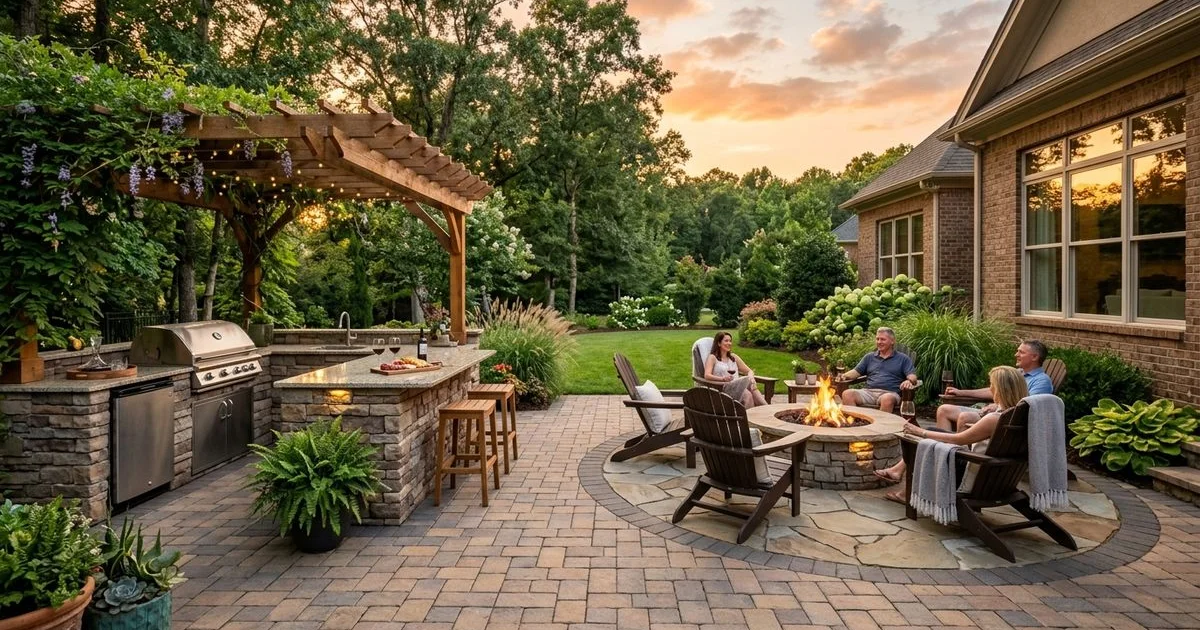
The National Association of Landscape Professionals estimates standard fire feature installations at approximately $9,000. Recent real estate trend reports indicate that well designed fire elements can raise property values by 10 to 15 percent. Fire features contribute value in three specific ways:
- They create natural gathering spaces for entertaining.
- They extend outdoor living into the cooler fall and winter months.
- They serve as a dramatic visual anchor for the entire backyard.
Stone fire pits with integrated seating walls offer an excellent value to impact ratio, delivering a strong focal point at a relatively modest price.
Outdoor Kitchens: Premium Market Returns
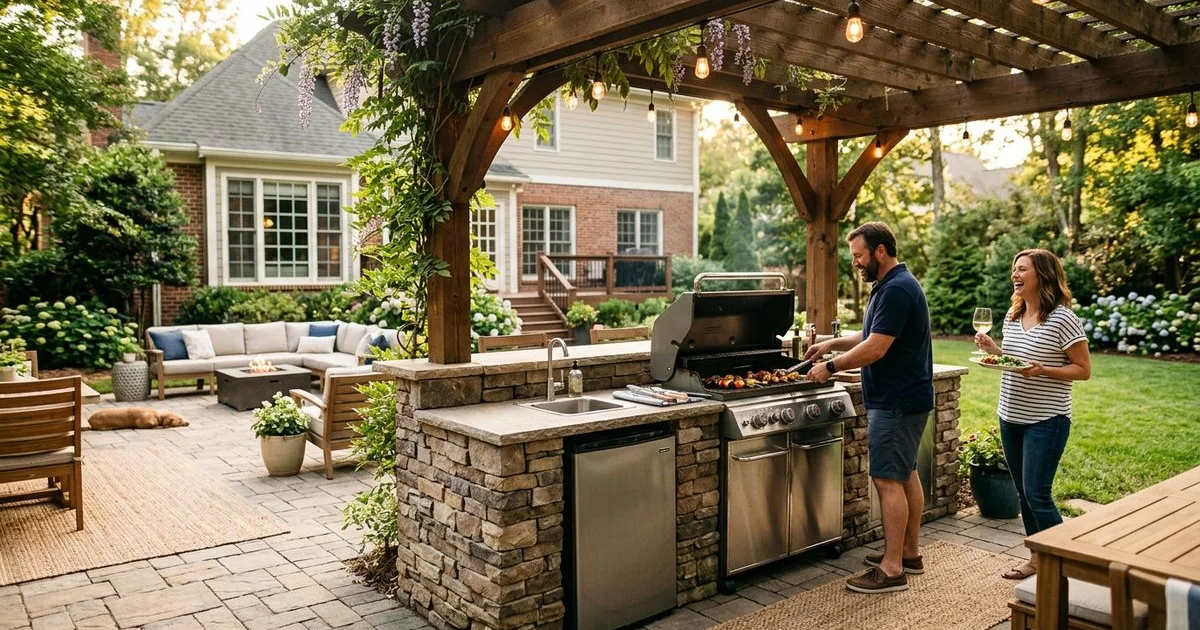
Outdoor kitchens perform best in the $500,000 and above price range, where buyers expect resort level amenities. Standard installations range from $5,500 to $22,000, while fully custom builds can exceed $50,000. In premium neighborhoods across the Triangle area, a well built outdoor kitchen often adds perceived value that exceeds its installation cost.
“High-performance outdoor kitchen setups can cut energy use by up to 50 percent compared to older systems, ensuring both luxury and efficiency.”
The key guideline from real estate professionals is to keep your total outdoor living investment below 15 to 20 percent of your home’s current market value. A $40,000 kitchen in a $300,000 home risks over-improvement. The same kitchen in a $700,000 home is proportionate and adds genuine equity.
Water Features: Standing Out From the Competition
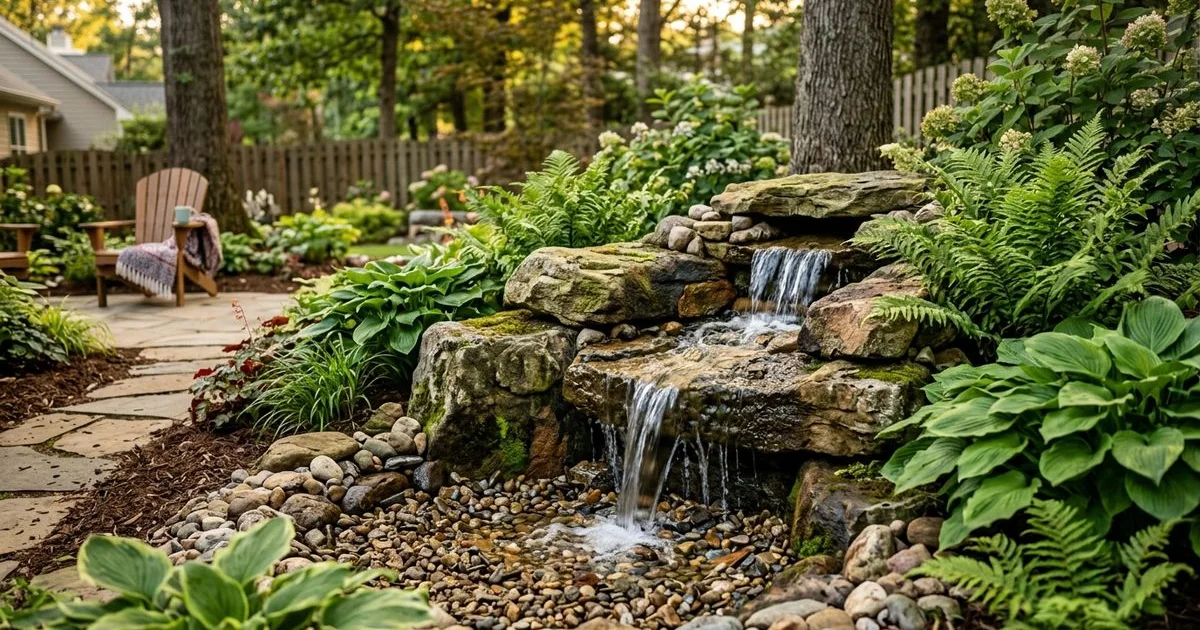
A pondless waterfall or natural stream creates a distinctive element that sets a property apart from standard housing inventory. Buyers remember these properties long after their showings conclude. The National Association of Landscape Professionals reports that custom water features can increase property appraisals by 10 to 15 percent. Environmental psychology studies reinforce the effect: properties with soothing water sounds see a 4.7 minute increase in buyer dwell time during showings.
A pondless waterfall costing $5,000 to $12,000 typically returns its cost in perceived value while offering the beauty of moving water without the ongoing maintenance demands of a traditional pond.
Variables That Shape Your Specific Return
The 30 Percent Rule
A 2026 industry benchmark recommends investing no more than 25 to 30 percent of your home’s current market value into combined renovations. This prevents over-improving beyond what local buyers will pay. Bringing your home slightly above the neighborhood standard commands a premium, but installing a $100,000 backyard resort in a neighborhood of basic concrete patios will likely dilute your return.
Quality and Craftsmanship
Poorly designed or cheaply built improvements actively detract from home value. A settling paver installation or a rusting fire pit signals deferred maintenance to buyers. The difference between a 60 percent return and a 90 percent return frequently comes down to professional design and installation quality.
Integration With the Home
Outdoor spaces that connect seamlessly with interior architecture deliver the highest returns. 2026 real estate data from luxury markets shows that fully integrated kitchen, patio, and landscape designs can push project ROI to 75 to 110 percent.
Beyond the Balance Sheet
The daily enjoyment you gain from a finished outdoor space extends well beyond resale calculations. Environmental psychologists describe this as the biophilic benefit, where regular contact with natural elements like stone, water, and fire actively reduces stress and improves well-being.
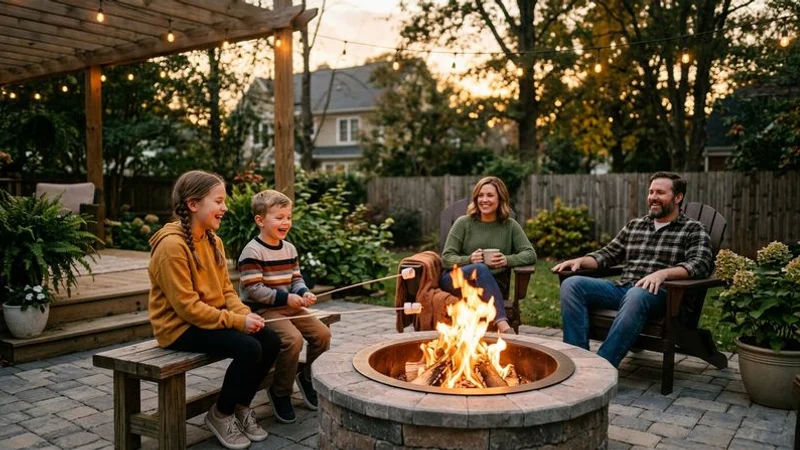
The 2024 NAR Remodeling Impact Report found that 60 percent of surveyed homeowners experienced increased enjoyment of their home after completing outdoor improvements. Evening meals move outside, weekend entertaining becomes routine, and the backyard transforms from unused space into the center of household activity.
The most satisfied homeowners design their outdoor spaces primarily for personal enjoyment. Resale value becomes a welcome secondary benefit when quality materials and broadly appealing features are chosen from the start.
A Practical Investment Sequence
For homeowners looking to scale their outdoor investment over time, this phased approach maximizes both daily use and long term value:
- Establish the hardscape foundation with a quality paver patio that creates usable square footage.
- Add a fire feature to create a gathering focal point and extend seasonal use.
- Install warm tone LED lighting in the 2700K to 3000K range to multiply nighttime impact.
- Consider an outdoor kitchen if your budget and neighborhood support it.
Each phase builds on the previous one, ensuring every dollar adds compounding value.
Plan Your Outdoor Investment With Confidence
If you are considering a backyard transformation, understanding how the project impacts your property value puts you in a much stronger position. Hardscapes Raleigh helps homeowners balance financial returns with genuine lifestyle improvements through connections to vetted local professionals.
Quality construction protects your investment for years, and thoughtful design ensures you enjoy the space every day until that equity is realized.
Schedule a design consultation to explore the options that make the most sense for your home, your neighborhood, and your vision.