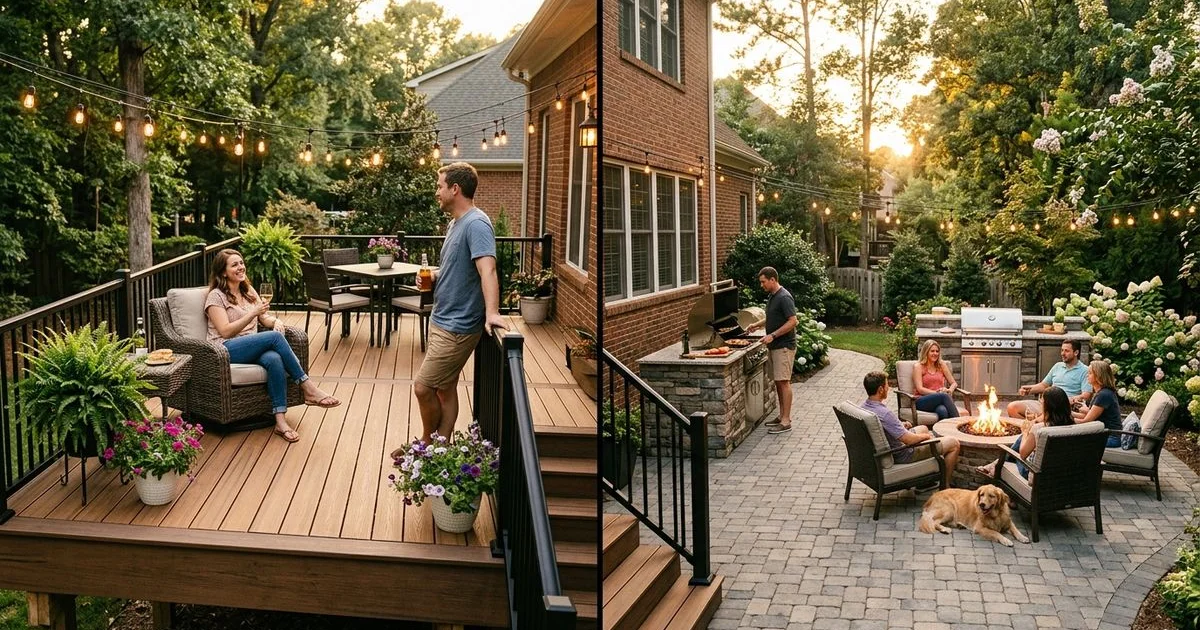
A new deck is one of the most effective ways to expand your living space and boost property value in the Triangle area. The 2024 Cost vs. Value report from Remodeling Magazine shows that a wood deck addition in the South Atlantic region can recoup up to 78% of its construction cost at resale. Composite decks perform even better, with recent data showing returns approaching 98% in strong markets.
Before you start browsing railing styles or picking out furniture, you need a clear picture of what this investment actually costs. North Carolina’s mild climate makes outdoor living practical for most of the year, and a well-built deck takes full advantage of that extended season. Here is a complete breakdown of material options, structural costs, and the factors that push budgets higher.
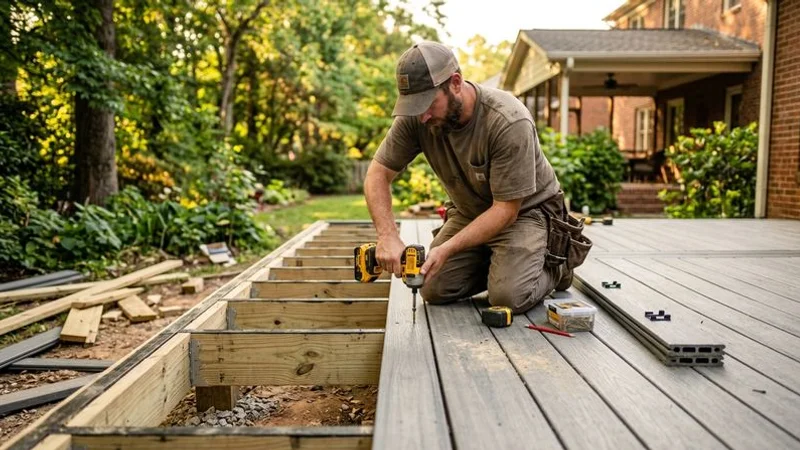
Decking Material Options and Pricing
The surface material you select is the single largest variable in your total budget. Each option carries distinct pricing, maintenance demands, and lifespan expectations.
Pressure-Treated Southern Yellow Pine
Pressure-treated lumber remains the most budget-friendly decking material available in this market. This wood is treated with Micronized Copper Azole (MCA) to resist rot and insect damage, both of which are significant concerns in the humid North Carolina climate.
Installed pricing runs $15 to $25 per square foot, including framing, decking boards, and basic railing. A standard 300-square-foot deck translates to a total of $4,500 to $7,500. Southern Yellow Pine has a Janka hardness rating of approximately 690 lbf, making it softer and more susceptible to denting than hardwoods.
The trade-off for the lower upfront cost is ongoing maintenance. Annual cleaning, staining, and sealing are essential to prevent graying, splitting, and warping. With diligent upkeep, a pressure-treated deck in this climate lasts 15 to 20 years. Without regular maintenance, expect visible deterioration within 10 to 12 years.
Premium Hardwood
Exotic hardwoods like ipe, tigerwood, and cumaru deliver exceptional beauty and natural durability. Ipe features an extraordinarily dense Janka rating of 3,680 lbf, making it naturally resistant to rot, insects, and heavy foot traffic without chemical treatment.
Hardwood decking typically costs $30 to $50 per square foot installed. A 300-square-foot ipe deck runs $9,000 to $15,000. The reduced maintenance requirements and 25-year-plus lifespan often make hardwoods the more economical choice over the full life of the structure.
Periodic application of a penetrating oil like Penofin Hardwood Formula preserves the rich wood color. Without oiling, the wood develops a silver-gray patina that many homeowners actually prefer. Structural integrity remains excellent regardless of your finishing choice.
Composite Decking
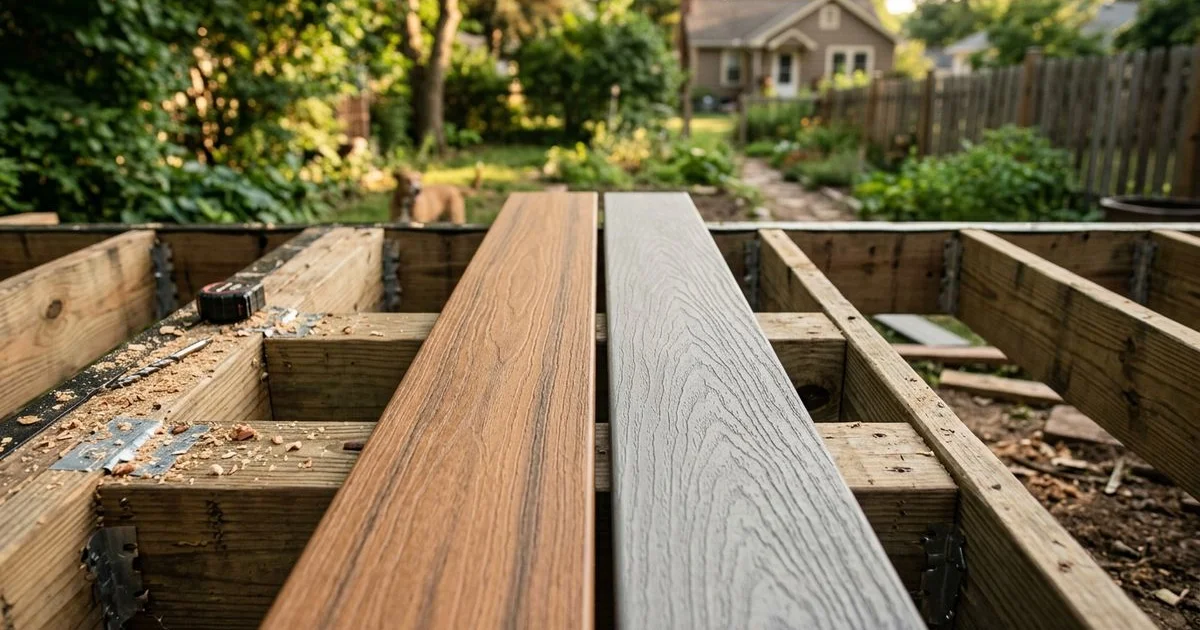
Composite boards have become the most popular choice for new construction across the Triangle. Leading brands like Trex, TimberTech, and Fiberon manufacture synthetic boards in a wide range of colors and wood-grain textures. For a detailed comparison of the two dominant brands, see our guide on TimberTech vs Trex.
Installed pricing ranges from $25 to $45 per square foot. The wide spread reflects significant quality differences between product lines:
- Entry-Level ($25 to $32/sq ft): Products like Trex Enhance or TimberTech Edge deliver solid budget value.
- Mid-Range ($32 to $38/sq ft): Trex Transcend or TimberTech Legacy provide deeper wood-grain aesthetics and better color retention.
- Premium ($38 to $45/sq ft): High-end lines like TimberTech Advanced PVC offer superior heat resistance and the most realistic textures.
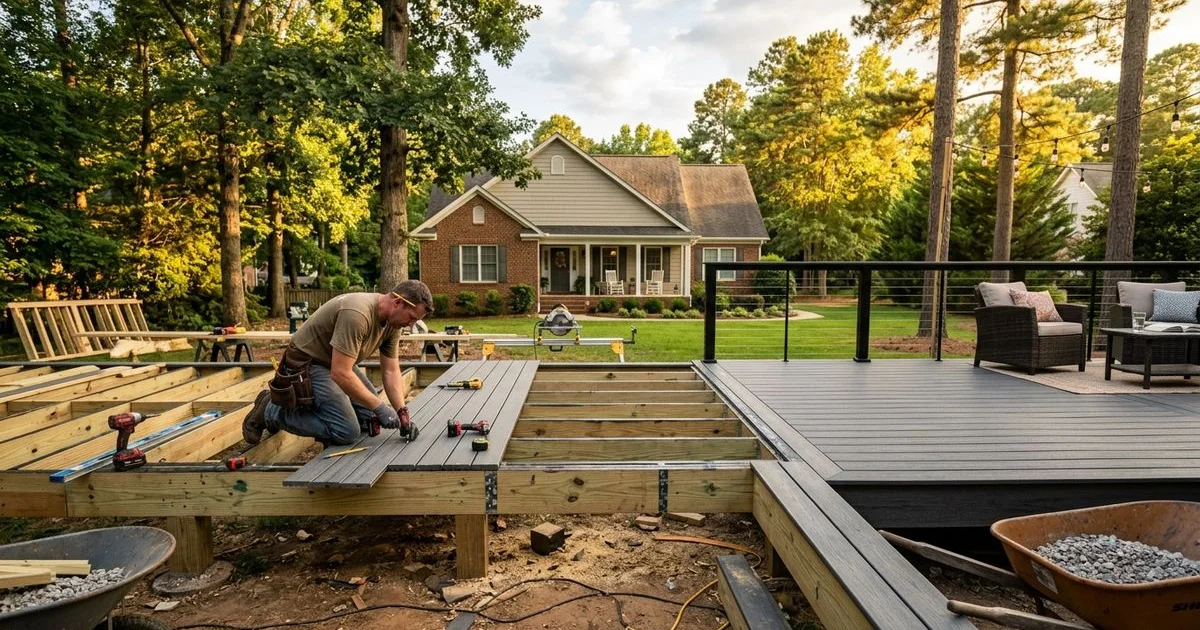
A 300-square-foot composite deck surface runs $7,500 to $13,500 before framing, railings, and stairs are added. The primary appeal is minimal maintenance: periodic cleaning with soap and water is the only required upkeep. Premium lines carry 50-year fade and stain warranties.
Structural and Framing Costs
The decking surface accounts for roughly 40 to 50 percent of your total project cost. The remaining budget covers several essential structural elements that homeowners often overlook during initial planning.
Substructure
Every deck requires a reliable structural frame consisting of posts, beams, joists, and specialized hardware like Simpson Strong-Tie lateral tension ties. Pressure-treated lumber serves as the standard framing material under all surface types, including composite and hardwood.
The North Carolina Residential Building Code requires footings to extend into undisturbed soil at a minimum depth of 12 inches below finished grade. This prevents seasonal ground movement from warping your frame. The clay-heavy soils common throughout the Raleigh area make proper footing depth especially important.
Ground-level framing on an accessible site adds $8 to $12 per square foot. Elevated designs requiring taller 6x6 posts and more complex engineering push framing costs to $15 to $22 per square foot.
Railings
Railing selections vary widely in both material and price. Building code requires a minimum railing height of 36 inches for any deck sitting 30 inches or more above grade.
- Basic Wood: Pressure-treated balusters cost $15 to $25 per linear foot.
- Composite Systems: Matched synthetic railings run $25 to $50 per linear foot.
- Metal and Cable: Aluminum rails or Feeney CableRail systems range from $50 to $100 per linear foot.
- Glass Panels: Frameless glass represents the premium tier at $75 to $150 per linear foot.
On a 300-square-foot deck, railing alone can cost anywhere from $750 for basic wood to $7,500 for glass panels.
Stairs, Permits, and Engineering
Elevated structures require code-compliant stairs with a maximum riser height of 8.25 inches and a minimum tread depth of 9 inches. Simple stairs from deck to ground cost $500 to $1,500; wide stairs with deep landings run $2,000 to $5,000.
Virtually all attached decks in Wake County require a building permit. The permit process costs $150 to $400 for a standard residential project. For complete details, see our building permit guide. Review wait times can stretch to two to four weeks during the busy spring season. Complex or elevated designs may also require stamped structural engineering plans, adding $500 to $1,500.
Factors That Drive Costs Higher
Several site-specific conditions can push your final bill above the standard averages.
Deck height is a major cost driver. Platforms elevated over 30 inches require mandatory safety guards and extra cross-bracing. Taller builds use thicker 6x6 posts and substantially more structural material than ground-level designs.
Complex layouts increase both material waste and labor hours. A simple rectangular shape carries a 5% to 10% waste allowance, while designs with diagonal decking, curves, or picture-frame borders increase scrap to 15% or 20%. Multi-level transitions can add 30 to 50 percent to the cost compared to a single-level platform of the same total area.
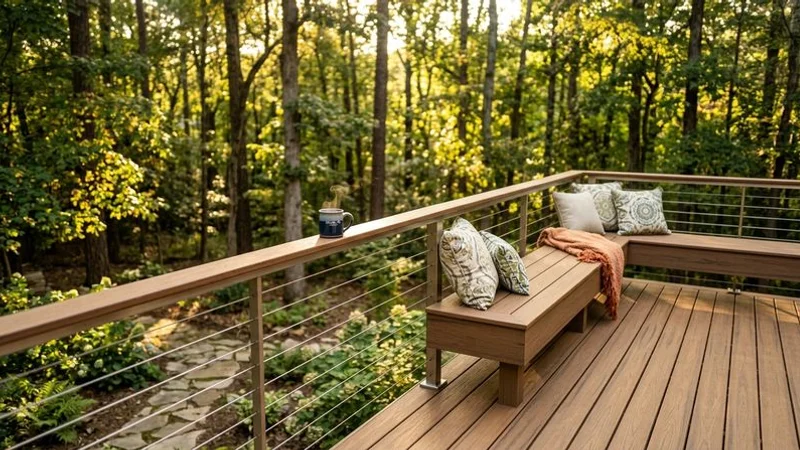
Built-in features like integrated benches ($50 to $100 per linear foot), custom privacy walls ($1,500 to $5,000), and heavy fire features or pergolas require reinforced joists to support extra weight.
Lighting enhances usability and safety. Low-voltage LED systems from Trex or Kichler add $1,000 to $4,000, typically including a 300-watt transformer, hidden wiring, and timer controls.
Demolition of an existing structure adds $1,000 to $3,000 for teardown and disposal, including landfill tipping fees and commercial dumpster rental.
Real-World Project Examples
These three project profiles represent common backyard upgrades Hardscapes Raleigh handles regularly.
| Project Tier | Deck Size and Materials | Key Features | Estimated Total Cost |
|---|---|---|---|
| Basic Wood | 12x16 ft Pressure-Treated | Standard wood railings, single staircase, flat lot | $6,500 to $9,000 |
| Mid-Range Composite | 16x20 ft Mid-Tier Composite | Composite rails, LED lighting, single landing pad | $18,000 to $25,000 |
| Premium Custom | 20x24+ ft Advanced PVC or Ipe | Cable rails, built-in seating, multi-level sloped lot | $30,000 to $45,000+ |
Should You Choose a Deck or a Patio?
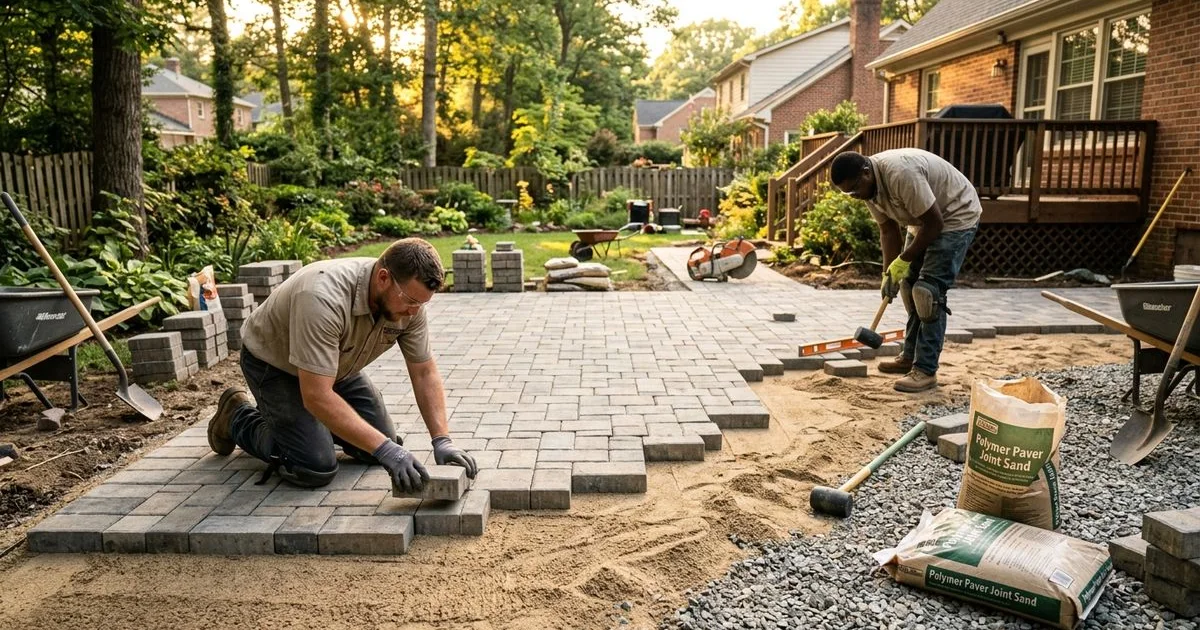
Before committing your budget, it is worth considering whether a paver patio might better serve your property. Elevated platforms excel on sloped lots where leveling the ground would require expensive retaining walls. A deck is ideal when the main living level sits well above the backyard grade, creating a seamless indoor-outdoor transition from your back door.
If your lot is relatively flat, a ground-level patio using Belgard or Techo-Bloc pavers delivers more usable space at a lower per-square-foot cost. Read our deck vs patio comparison for a thorough look at both options.
Getting the Most Value From Your Budget
Smart budgeting begins with identifying which features matter most. If low maintenance is your priority, invest in a durable composite surface while saving on standard wood railings. If aesthetics are paramount, a premium glass or cable railing system can visually elevate even a modest footprint.
The cheapest option upfront rarely remains the most affordable choice over 20 years. A composite board that costs $5,000 more than pine but eliminates annual staining is the stronger long-term financial decision. Work with an experienced deck builder to optimize your final blueprint and minimize unnecessary engineering costs.
Get a Personalized Estimate
Every property is different, and the most reliable way to understand your exact costs is to have a professional measure your yard and structural attachment points. We provide comprehensive assessments covering every phase of construction. Schedule a free design consultation with our Raleigh building team today, and we will give you honest numbers you can plan around.