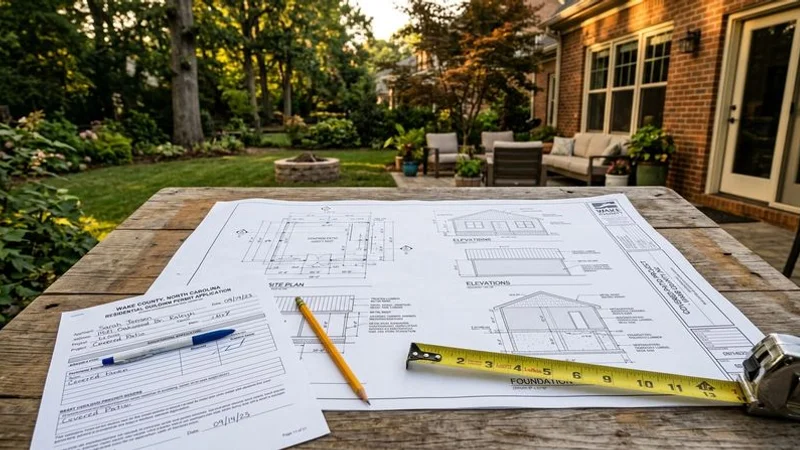
Before you pick out furniture or plan the first cookout under your new covered patio, there is one question worth settling immediately: do you need a building permit for a covered patio in Wake County? The short answer, in nearly every case involving a roofed structure, is yes. Getting this sorted out before construction begins protects your investment, keeps you on the right side of the law, and prevents expensive headaches down the road.
Why Permits Exist for Outdoor Structures
Permits are not bureaucratic busywork. They exist to verify that your new addition can safely handle the structural loads it will face, from the weight of the roof to the lateral forces generated by high winds. North Carolina General Statute 160D-1110 gives local jurisdictions the authority to enforce building codes. In Wake County, the Inspections Division applies the NC Residential Code to all residential construction projects.
The Triangle area regularly encounters severe summer thunderstorms, and the local code reflects this reality. Structures must be engineered to withstand design wind speeds of approximately 115 mph. Proper footing depth and engineered roof connections keep your patio from becoming a liability during a storm.
Permits also protect your home’s resale value. Unpermitted additions are routinely flagged during title searches and home inspections, giving buyers leverage to demand price reductions or force retroactive legalization before closing.
Covered Patios Attached to Your Home
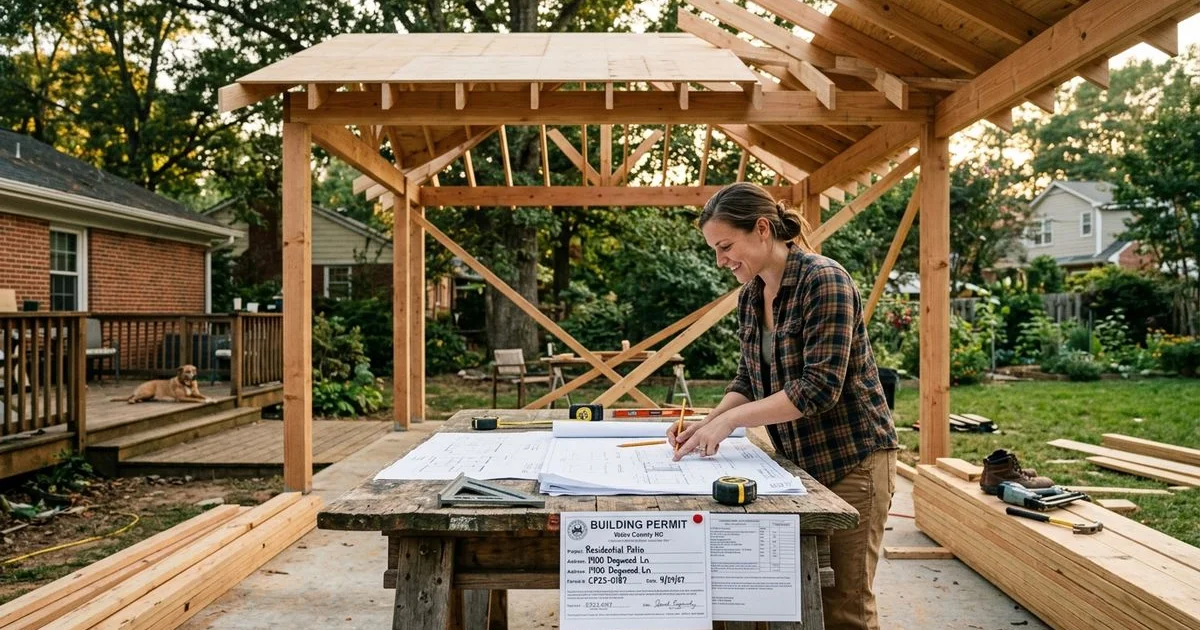
Any covered structure that attaches directly to your house requires a building permit in Wake County. The moment a roof extension ties into your home’s structural envelope, it must pass official review. This is non-negotiable.
An attached covered patio typically requires multiple separate approvals:
- A building permit for the framing and structural connections
- An electrical permit for ceiling fans, light fixtures, or new outlets
- A zoning review to confirm the roof does not encroach on property setback lines
The Hardscapes Raleigh team recommends addressing all three requirements simultaneously during the initial submission to avoid delays.
Freestanding Structures and Size Thresholds
Detached pavilions and freestanding covered structures follow slightly different rules. Generally, a permit is required when the footprint exceeds 200 square feet. Smaller structures may be exempt from the main structural review, but that exemption is not a free pass on everything else.
Zoning setbacks still apply regardless of size. Any structure exceeding 12 feet in any single dimension triggers a basic zoning review to verify adequate distance from property lines. Here are the typical setback distances:
- Side yard: 5 to 10 feet depending on the zoning district
- Rear yard: 15 to 20 feet in most residential areas
- Easement clearances: no structures over buried utility lines
A separate electrical application is always mandatory if you plan to run power to a detached structure, regardless of total square footage.
Decks, Pergolas, and Other Common Structures
Attached and Freestanding Decks
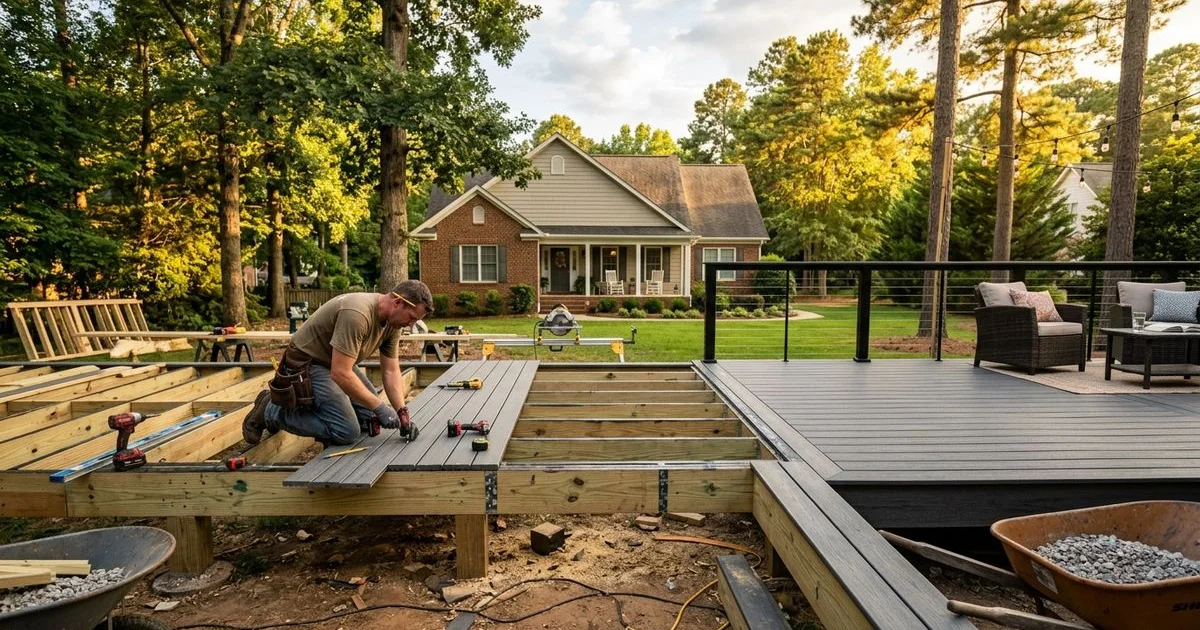
All attached decks require a full structural review and permit. There is no minimum size exemption for attached decks because the ledger board connection point is a critical failure area that inspectors must scrutinize. Freestanding decks under 200 square feet and lower than 30 inches above grade may qualify for an exemption, but you should verify this through the Wake County permitting portal before purchasing materials.
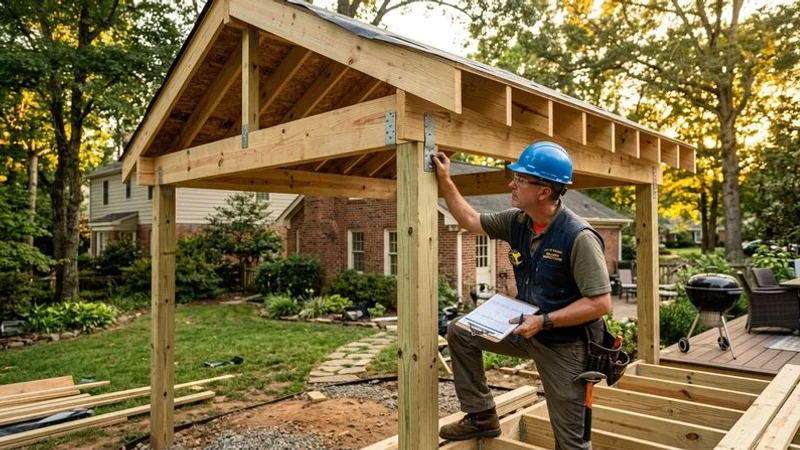
The review process requires detailed plans showing post hole locations, footing depth (minimum 12 inches below grade), beam and joist sizing, ledger board flashing details, and railing measurements. County inspectors will visit the site at least twice: once to check open footings before concrete is poured, and again for a final safety inspection.
Pergolas
Pergolas frequently catch property owners off guard. Attached pergolas almost always require a full review because they anchor into your exterior walls. Freestanding pergolas under 200 square feet typically skip the main structural review but remain subject to zoning setback requirements.
The critical distinction is how the county classifies the structure. If a pergola features a solid permanent roof, a weather-resistant retractable awning, or tightly spaced louvers that block rain, it is classified as a covered roof. That classification triggers a full review process regardless of attachment or size.
Open Ground-Level Patios
A standard ground-level paver patio that does not connect to your home’s foundation typically bypasses formal review. Natural stone and flagstone surfaces sitting directly on compacted gravel fall into this exempt category, provided the total project cost stays under the state’s $40,000 threshold for non-structural residential work.
Exceptions exist for complex features. Retaining walls taller than four feet require engineered plans and structural review. Significant grading that alters neighborhood drainage patterns will also trigger a mandatory review. This regulatory freedom makes a well-designed paver patio an attractive option for homeowners who want to avoid permitting delays.
Outdoor Kitchens and Fire Features
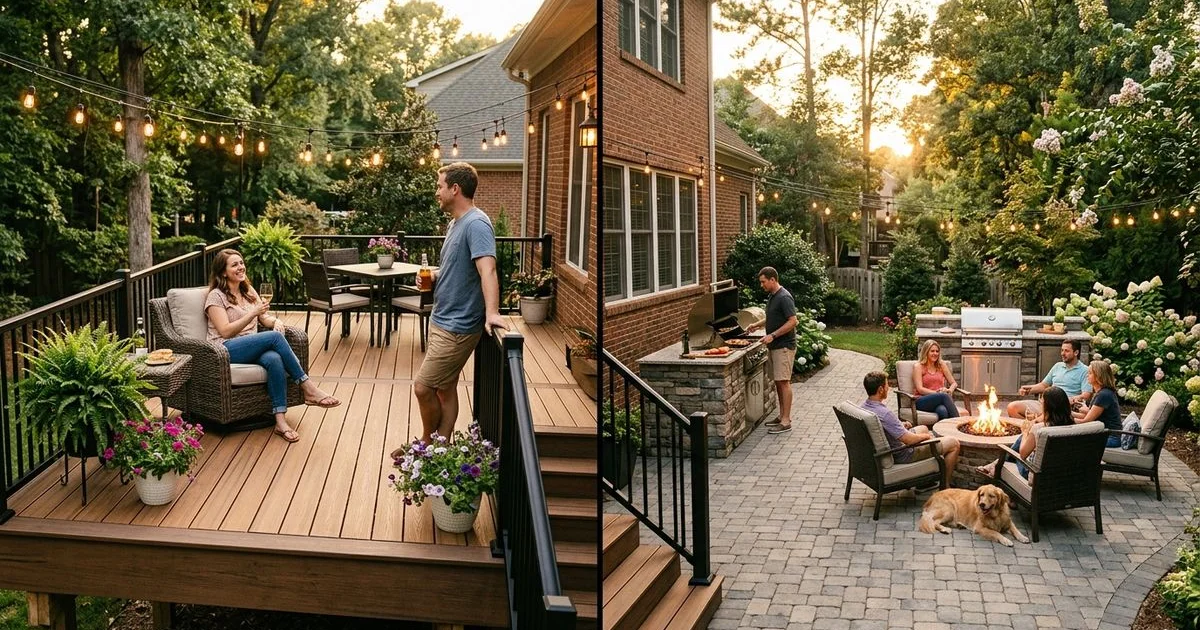
Custom outdoor kitchens involve multiple trades and trigger several specific permits. Running a new gas line to a built-in grill requires a plumbing permit. Adding GFCI outlets and task lighting necessitates an electrical permit. Building a roof over the cooking area brings the main structural permit into play. For a full breakdown, check our outdoor kitchen cost guide.
Gas fire features require a plumbing application for the gas line installation. Permanent wood-burning fire pits must adhere to specific setbacks and local fire codes. Large outdoor fireplaces with masonry chimneys usually require a structural review for the foundation.
How to Submit Your Permit Application
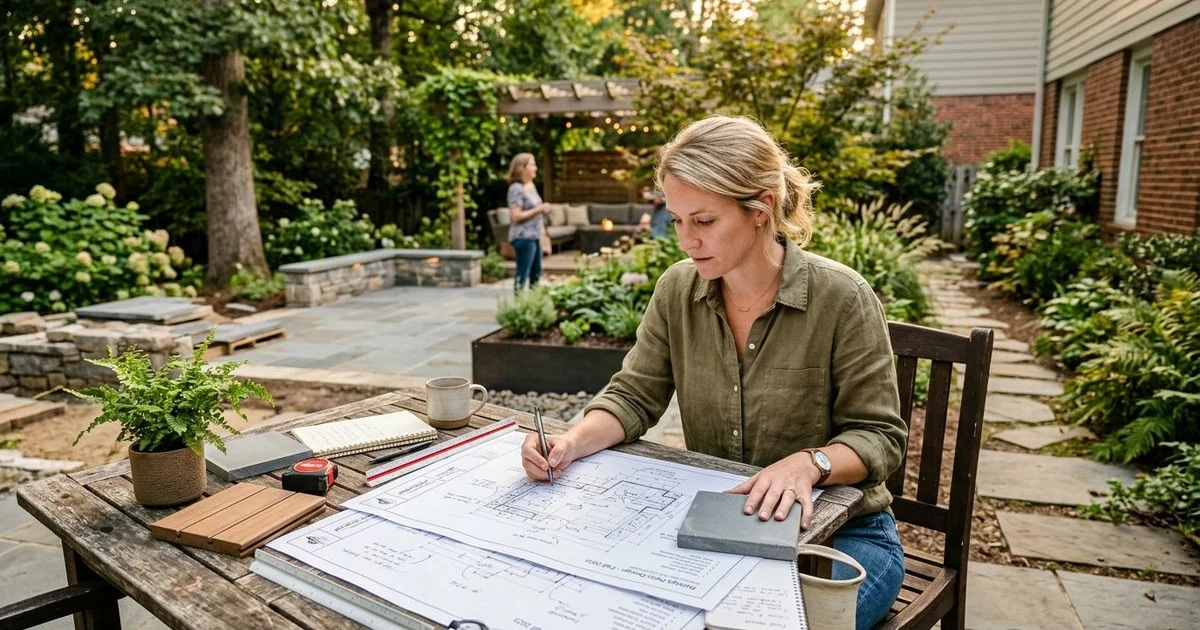
Wake County handles residential permit applications through its online permitting system. The initial submission requires a detailed site plan showing property lines and the proposed structure, along with full construction drawings specifying lumber sizing, metal fasteners, and foundation specifications. Complex projects may require stamped plans from a licensed North Carolina structural engineer.
Processing Time and Common Delays
Standard residential applications typically move through the review queue in 10 to 15 business days. Expedited review is available for an additional fee if you are working against a tight deadline. The most common causes of delays include:
- Missing NC Energy Code compliance forms
- Unscaled or unclear site drawings
- Failing to list licensed subcontractors for plumbing or electrical work
- Omitting the required surety bond for projects within city limits
Approximate 2026 Fee Schedule
| Project Type | Approximate Fee Range | Additional Requirements |
|---|---|---|
| Basic Deck Addition | $150 to $350 | Plus potential demolition fee |
| Covered Porch/Patio | $200 to $500 | Base fee scales with project value |
| Electrical Work | $75 to $200 | Required for all new outdoor circuits |
| Gas/Plumbing Line | $75 to $200 | Required for outdoor kitchens/fire pits |
| Minimum Base Fee | $59.70 | Applies to minor work under $3,000 |
These figures do not include the 7.25% combined state and county sales tax on construction materials.
HOA Review in Local Neighborhoods
Many neighborhoods in the Raleigh area operate under the North Carolina Planned Community Act, which grants homeowners associations significant architectural control. An HOA approval letter does not replace a county permit, and a county permit does not override your neighborhood’s design guidelines. You need both before breaking ground.
Architectural review committees evaluate material choices, paint and stain colors, roof pitch, and how the structure impacts neighboring properties. The review process can take two weeks to two months, with well-established communities in North Hills, Wakefield, Heritage, and Five Points often requiring multi-step approvals.
Submit your HOA application as early as possible so you can incorporate any required design changes before filing the final structural plans with Wake County.
The Consequences of Building Without a Permit
Skipping the required paperwork in Wake County carries serious consequences. Code enforcement can discover unpermitted work through neighbor complaints, aerial mapping, or routine inspections. The immediate result is a stop-work order posted on your property.
The county can levy daily fines until the project comes into compliance. You may be forced to open finished ceilings or tear up completed surfaces so an inspector can examine hidden framing. In extreme cases, the county has the legal authority to order demolition of non-compliant structures.
Choosing a Contractor Who Manages the Process
Experienced local builders handle the entire permitting process as a standard part of their service. Be cautious of any contractor who suggests skipping the review process to save money. North Carolina law requires a licensed General Contractor for residential projects exceeding $30,000 in total value.
The Hardscapes Raleigh team manages every detail of the permit submission on your behalf. We prepare structural drawings, post required surety bonds, and handle revision requests from the zoning office. Your project manager schedules all required inspections and meets the inspector on site. At the end of the job, you receive a finalized folder containing all approved documents and passed inspection reports, protecting your property value for years to come.
Start Planning Your Outdoor Project
You no longer need to wonder whether your covered patio requires a permit. A professional team manages the regulatory process from start to finish, freeing you to focus on designing the outdoor space you have always wanted.
Our local crews have years of experience navigating the specific codes required for the Raleigh area. They handle everything from straightforward paver patios to fully engineered decks requiring multi-phase county reviews. Reach out today to schedule a free design consultation and start your backyard transformation with total confidence.