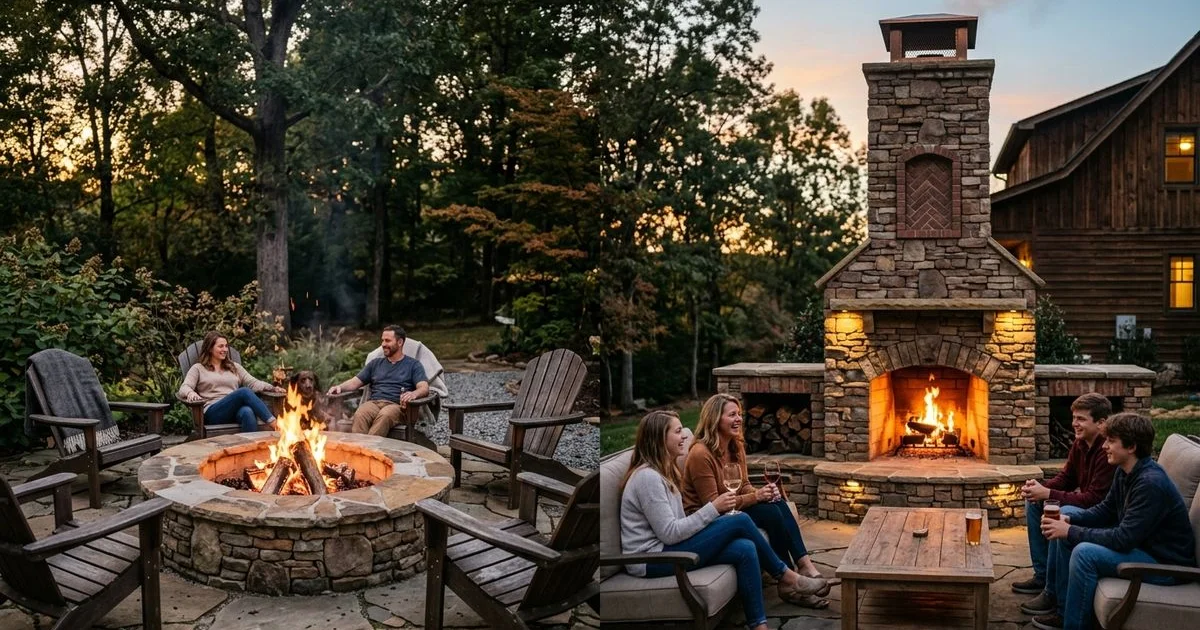
When October arrives and evening temperatures in the Triangle start dropping into the 40s, most backyards go dormant. Fire features change that equation completely. A well-designed fire pit or outdoor fireplace can extend your outdoor season by three months or more, turning chilly evenings into comfortable gatherings that last well past sunset.
The question is which option fits your property, budget, and entertaining style. Both deliver warmth and ambiance, but they differ significantly in cost, space requirements, heat distribution, and aesthetic impact. Here is a practical comparison based on current pricing and local building considerations.
Cost Breakdown: What Each Option Actually Runs
Budget is often the deciding factor, and the price gap between these two options is substantial. Understanding the full financial picture, including installation, materials, and ongoing fuel costs, helps you make a confident decision.
Fire Pit Installation Costs
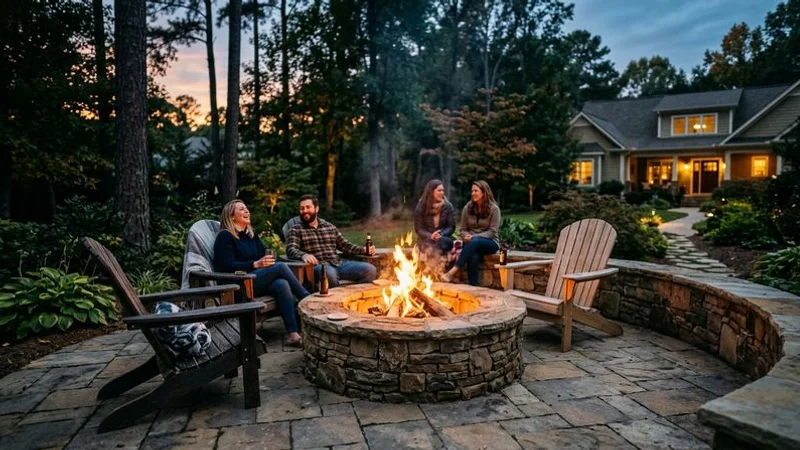
Basic above-ground stone fire pits install for $1,500 to $3,500. Adding a dedicated natural gas connection brings the total to the $3,000 to $6,000 range. Custom units with integrated stone seat walls, which are among the most popular requests from local homeowners, run between $5,000 and $15,000.
The final material selections drive most of the cost variation. A simple concrete block core wrapped in stone veneer saves considerable money compared to full natural stone construction. Recent 2026 data shows fire pit installations deliver a 67% to 80% return on investment at resale, making them one of the smartest upgrades you can add.
Outdoor Fireplace Installation Costs
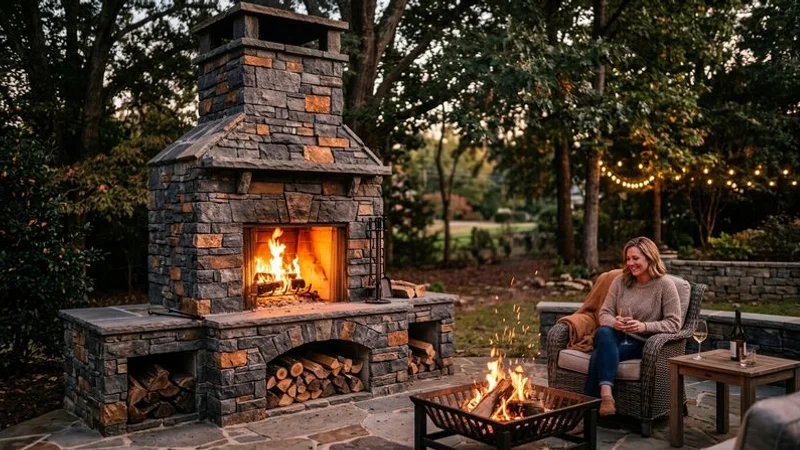
Basic outdoor fireplaces with a simple firebox start around $8,000. The average professional installation in 2026 falls between $15,000 and $25,000, covering quality stone, a full chimney, and a sturdy hearth. Luxury builds with flanking walls, custom mantles, and premium natural stone easily reach $30,000 to $50,000.
The steep price reflects the need for structural engineering, a reinforced concrete foundation (which alone costs $1,000 to $3,000), and highly skilled masonry work. You are paying for a permanent architectural addition to your home, and buyers recognize that value with an average ROI of about 56%.
Ongoing Fuel Costs
Fuel choice affects your operating budget year after year.
- Seasoned hardwood costs $200 to $350 per cord locally. Most households burn half a cord to a full cord per season.
- Natural gas runs roughly $0.56 to $1.06 per hour at full flame based on 2026 utility rates.
- Propane averages slightly higher at $0.83 to $1.33 per hour.
For permanent installations, natural gas is the most practical choice. It eliminates tank refills, provides an endless fuel supply, and delivers a perfectly consistent flame height.
Heat Performance: How Each Warms Your Space
The way heat radiates from each option is the most underappreciated difference between the two. It directly affects how comfortable your guests will be on cold nights.
Fire Pit Heat Distribution
Fire pits radiate heat in a full 360-degree pattern. Everyone seated within four to six feet of the blaze stays warm on a 50-degree evening. This makes fire pits highly effective during the mild fall shoulder season when you just need to take the edge off the chill.
The trade-off is wind. On gusty nights, smoke shifts constantly and can blow directly into your face. There is no chimney to channel it away. Gas fire pits largely eliminate this issue since they produce minimal smoke, but wood-burning units require patience and strategic seating.
Outdoor Fireplace Heat Distribution
Fireplaces concentrate heat in a single forward-facing direction. Dense masonry absorbs thermal energy while the fire burns and continues radiating warmth long after the flames die down. You can sit comfortably eight feet from the hearth on a 40-degree January night.
The tall chimney actively draws smoke up and away, eliminating the annoyance of shifting winds. The directional nature of the heat means the sides and back of the structure provide no warmth, so furniture must be arranged theater-style facing the hearth.
For the coldest winter nights in the Triangle, a fireplace provides more effective heating for a seated group. For mild autumn evenings with a larger crowd, the fire pit’s all-around warmth is more inclusive.
Fire Pit Styles and Options
Fire pits come in several distinct formats, each suited to different design goals and budgets.
In-ground rings provide a traditional campfire experience. Setting fire-rated brick at ground level typically costs $500 to $2,000 and works well for casual, rustic settings.
Above-ground stone pits rise 12 to 18 inches above the patio surface. They keep the fire safely contained while looking polished and intentional. These are the most frequently requested style from our clients.
Fire pit tables offer a sleek, modern alternative. Brands like Napoleon manufacture propane-powered tables that serve as sophisticated conversation pieces. Priced at $2,000 to $8,000, they work safely on composite decks where open flames are not permitted.
Custom pits with seat walls anchor your entire patio design. A curved, capped seat wall surrounding the fire provides maximum comfort for large groups. These comprehensive masonry projects require a $5,000 to $15,000 investment.
Gas vs Wood-Burning: Local Code Considerations
This secondary decision affects more than just ambiance. Local fire codes impose strict rules that may narrow your options.
Wood-burning recreational fires must sit at least 25 feet from any structure. The fuel area must be limited to three feet in diameter. These clearance requirements are enforced by the local fire department independently of standard building codes. On smaller properties, these setbacks can make wood-burning options impractical.
Gas and propane units require only a 15-foot clearance from combustible materials. They ignite instantly, produce no ash, and work well in tighter spaces and covered areas. For permanent gas installations, running a dedicated gas line provides a reliable, uninterrupted fuel supply.
Space Requirements and Placement
Fire pits offer remarkable flexibility for smaller or irregularly shaped backyards. A round pit with a seating ring fits in a space as compact as 14 by 14 feet. Expanding that footprint to 16 by 16 feet makes circulation noticeably more comfortable. Pits can be positioned centrally on a patio or in a separate gravel lounge area away from the house.
Fireplaces demand substantially more space and deliberate planning. You need a minimum footprint of 15 by 20 feet to accommodate the masonry structure and forward-facing seating area. These structures work best positioned against a boundary wall or at the far end of your yard, serving as a visual anchor that defines the edge of your entertaining zone.
Side-by-Side Comparison
| Feature | Fire Pit | Outdoor Fireplace |
|---|---|---|
| Average 2026 Cost | $1,500 - $5,000 | $15,000 - $25,000 |
| Heat Distribution | 360-degree radius | Directional (forward only) |
| Space Required | 14x14 feet minimum | 15x20 feet minimum |
| ROI Estimate | 67% - 80% | ~56% |
| Fire Code | 25-foot clearance (wood) | Built to structural code |
Which One Is Right for You?
Choose a fire pit if you prioritize casual, inclusive gatherings where everyone sits together in a circle. This is the clear winner for budgets under $10,000 and properties where flexible placement matters. Fire pits integrate easily into an existing patio without major construction.
Choose an outdoor fireplace if you want a striking architectural statement that anchors your entire outdoor living space. Fireplaces deliver concentrated heat for homeowners who want to entertain on the coldest winter nights, and the chimney completely eliminates smoke management concerns.
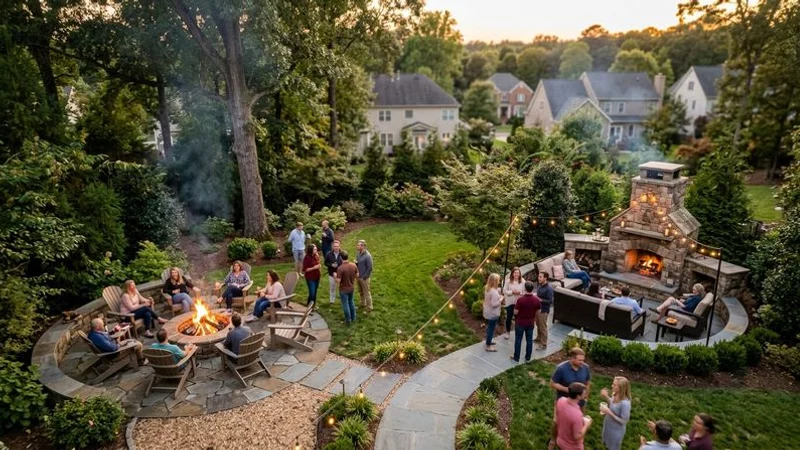
For larger properties, consider both. A dual setup with a formal fireplace at one end and a casual fire pit conversation area creates two distinct entertaining zones that serve different moods and group sizes.
Design Your Fire Feature With Hardscapes Raleigh
Every project starts with a careful analysis of your available space, typical guest count, and preferred entertaining style. Our installation teams build both heavy masonry fireplaces and custom stone fire pits with the structural integrity to last decades.
Schedule a free design consultation with our fire feature specialists today. We will assess your yard, walk you through the options, and create a plan that extends your outdoor season well into winter.